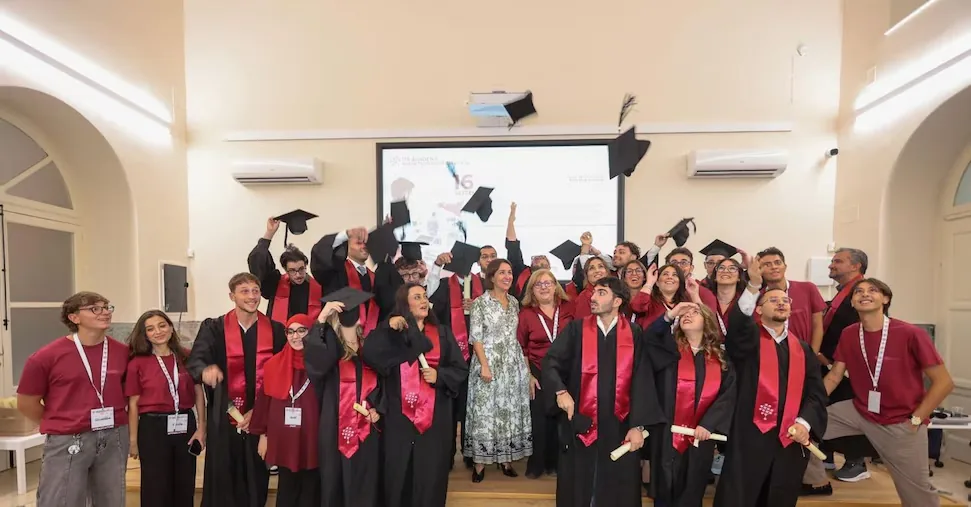



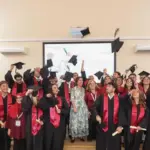

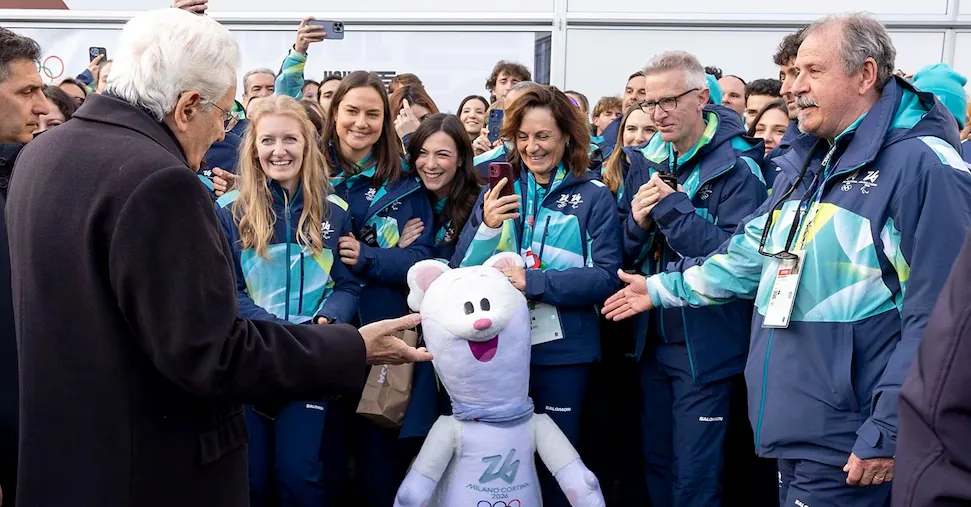
Problem solving, teamwork, intercultural communication, and stress management are among the soft skills that the Milan Cortina Winter Games will leave to the over 20,000 volunteers who took part: 13,708 for the Olympic Games and 6,316 for the Paralympic Games. Mostly young people, over half were under 35, who will be able to face entering the job market with an advantage partly due to the training received, partly because being part of the organizational machine of an event of this scale allows for a learning and intergenerational collaboration path that would normally take months and months.
Read more The EU approves the Kids Act, «ban on social media for under 13s»
Ask the Sun
The questions are automatically suggested by 24Ore AI
based on the content viewed.
The Games as a skills incubator
The second Report of the Randstad Research Observatory – Milan Cortina 2026 “highlights how for the volunteers the Milan Cortina 2026 Games proved to be a useful complementary tool to traditional learning channels – explains Emilio Colombo, Coordinator of the Randstad Research Scientific Committee -. The path in Olympic and Paralympic volunteering, in fact, was a real ‘incubator’ of transversal and social skills, which at the end of the event flowed into the territories and communities of belonging. And this did not happen only in a unidirectional way: with over half of the volunteers made up of active workers or retirees with a career behind them, it was possible to enhance and systematize the previous experience, attracting even very complex expertise to return it enhanced to the social fabric.” Diana Bianchedi, Chief Strategy Planning & Legacy Officer of the Milan Cortina 2026 Foundation adds that “the volunteers were the beating heart of Milan Cortina 2026. This Report confirms what we saw every day on the competition fields and in operational places: thousands of people who made time, energy, and talent available, and in return acquired a wealth of skills that today represents a true legacy for the country.”
The origin of the volunteers
Observatory data show that among the registered who completed the process for volunteer activities at the Olympics, 90% had European citizenship. Italians were 78.9%, while 21.1% came from abroad, mainly from France (3.9%), the United States (2.7%), and Germany (2.5%), then Great Britain (1.3%), Switzerland (1.2%), Canada (1.1%), China (1.1%), the Netherlands and Spain (each with 0.5%). 93% of those registered for the Paralympics were European, with the share of residents in Italy at 85.1%. Those from abroad mainly came from France (3.2%), the United States (2%), and Germany (1.7%).
Read more Space debris and satellites out of orbit, the 2026 report published by the Esa
Gender and age
As for gender, women were the majority of volunteers: 55.3% for the Olympics and 53.3% for the Paralympics. As in the general average of volunteering, they confirm themselves as the main engine of civic commitment and organizational support. The volunteer pool proved to be extremely young: 35.5% were 18-25 years old, over half were under 35. The profile of Paralympic volunteers was more mature: although the young base remains significant (27.2%), the “senior” age groups are wider and 22.4% were between 56 and 65 years old. Among the registered, 45% were already employed.
The sectors
Among the various economic sectors, Olympic volunteers were mainly distributed in the Common Area which includes Communication, Medical, and Human Resources activities (45.24%), recreational and sports activities (19.65%), transport and logistics (17%), tourist services (15%), digital services (1%). Also for the Paralympics, the Common Area represented the largest share (43.20%), followed by Transport and logistics (22.05%) and Recreational and sports activity services (18.35%).
Read more From the farewell to the car tax, savings of up to 240 euros for 14.5 million vehicles