









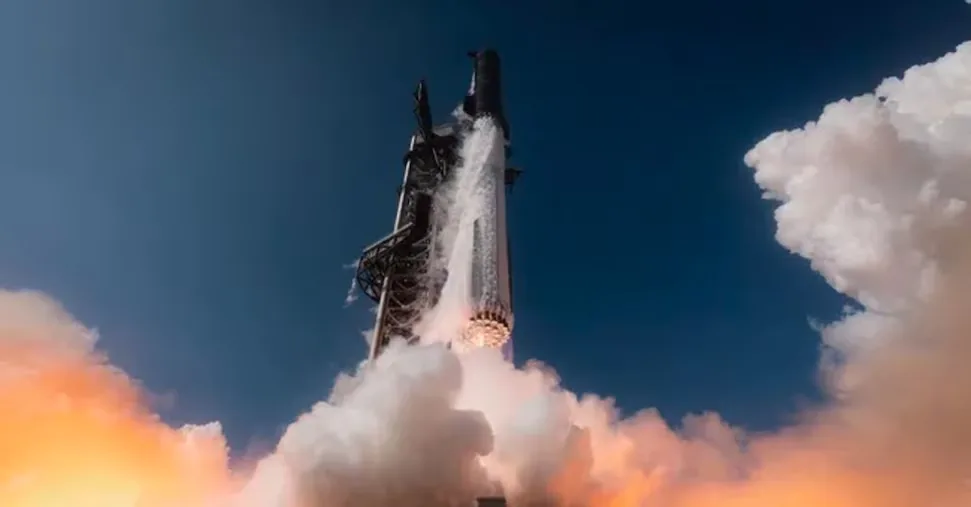
Starship, the gigantic rocket from SpaceX at the center of Elon Musk‘s lunar and Martian ambitions, is preparing for its thirteenth test flight. The launch is scheduled for the 17th, in the early hours of the night in Italy, from the Starbase site in Texas, on the Gulf of Mexico coast.
Read more Design: Oice, 2025 turnover of associated companies at 4.6 billion (+6.1%)
Ask the Sun
The questions are automatically suggested by 24Ore AI
based on the displayed content.
It is a key test, both technically and industrially and financially. It will indeed be the first Starship flight since SpaceX went public, and will test investors’ confidence in the “fly, fail, fix” model that has accompanied the development of the most powerful rocket ever built. Beyond the exploration prospects towards the Moon and Mars, Starship is also the asset with which the company aims to rapidly deploy new large satellite constellations: the expansion of Starlink and similar networks intended for U.S. military uses.
To support these programs, SpaceX must put thousands of satellites into orbit quickly and cheaply. In the planned flight profile, lasting about 90 minutes in total, Starship will follow a suborbital trajectory, will touch space but without completing a full orbit around the Earth, and will re-enter over the Indian Ocean sector. For the first time, it will carry 20 Starlink Version 3 satellites, of the new generation: they will be released along the trajectory, will try for a few minutes to integrate with the constellation via laser links, and then will be allowed to re-enter the atmosphere, where they will be destroyed.
Read more Fashion, the Milan prosecutor’s office shines a spotlight on 11 more brands
The previous test, in May, was judged a step forward but not without issues. The Super Heavy, the first stage of Starship, failed to complete the engine reignition sequence to simulate a controlled landing in the Gulf of Mexico and ended up in the sea after losing control. The second stage also lost one of its engines during ascent, although it still managed to reach the planned altitude and release 20 simulated satellites.
Based on the investigation conducted with the Federal Aviation Administration, SpaceX has modified the engine start procedure and the alarm and abort systems to reduce the risk of new failures during the booster separation and re-entry phase. This week’s flight must demonstrate that the corrections work, paving the way for the next phase, which foresees at least a full orbit, return of the first stage to the Gulf of Mexico, and possibly also the upper Ship section.