








According to the economic outlook of the OECD presented yesterday in Paris, Italy’s GDP growth is expected to settle at 0.5% in 2026, due to “the new energy price shock weighing on household consumption, investment, and exports.” But a significant fact is that “the increase in energy prices will cause an increase in inflation, canceling out the recent progression of real wages.” Still according to the OECD, in 2027, “the decline in energy prices and the easing of uncertainties will bring growth to 0.6%. Italy’s prospects – the OECD specifies – are relatively exposed to the evolution of the conflict in the Middle East, given the high share of energy produced from imported fossil fuels and the weight of exported manufacturing production.”
Read more Doubling of the Mont Blanc Tunnel, France’s ‘opening’
The driving force of pharmaceuticals
“The first signs of a progressive economic recovery were emerging between late 2025 and early 2026, when the sharp increase in energy prices and instability began to erode confidence,” writes the OECD, highlighting the impact of the war in the Middle East on Italy’s economic situation. In the report dedicated to Italy, the international organization underlines that Italian GDP “progressed by 0.2% in the first quarter of 2026 compared to the previous quarter, supported by increased investment and production linked to pharmaceuticals and energy and digital transitions. In 2026 – the OECD continues – companies reported an improvement in their orders while the increase in funds released under the Pnrr had a stimulating effect on construction activity and tax incentives supported residential investment.” As for the Milan-Cortina Olympic Games, they “temporarily boosted activity in the services sector as well as exports.” According to the OECD, the outbreak of the conflict in the Middle East, however, caused a “sharp deterioration in consumer and business confidence. The increase in energy prices brought the inflation rate to 2.8% in April.”
Greater energy dependence for Italy
As for exports, “they recorded a decline in volume at the end of 2025, particularly those to the Eurozone and US markets, before slightly recovering at the beginning of 2026.” Italy “is more dependent than other large Eurozone countries on refined oil and natural gas (a quarter and 11% of total supply respectively) transported through the Strait of Hormuz.”
Read more Roland Garros, live on Nove the all-Italian semifinal Arnaldi-Cobolli
Scarpetta (OECD): the global economy is under pressure again
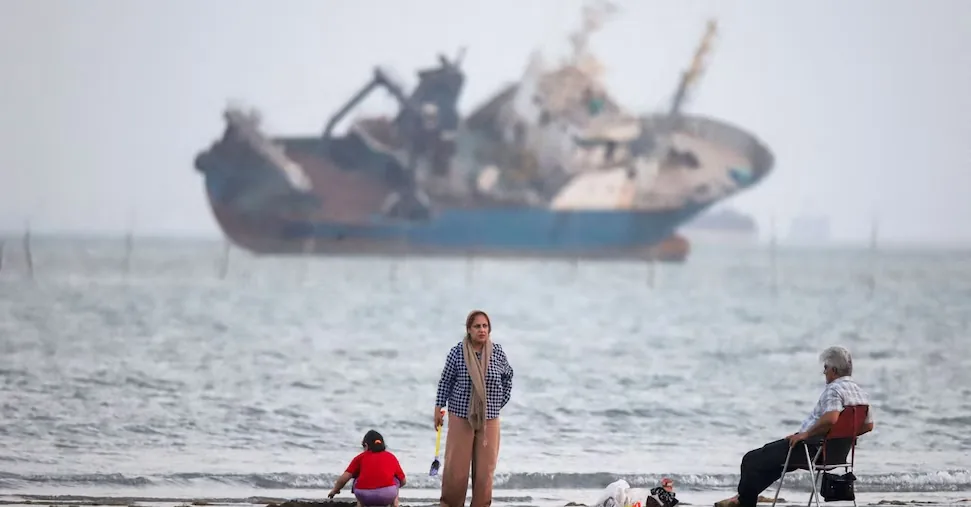
The “global economy is under pressure again. Disruptions to maritime transport in the Strait of Hormuz, together with damage to energy infrastructure, have caused a sharp increase in energy prices and an increase in the costs of fertilizers and other essential industrial inputs. These price increases fuel inflationary pressures, erode confidence, and weigh on household demand and economic activity,” writes OECD chief economist Stefano Scarpetta in the introductory message. “The evolution of the conflict in the Middle East – Scarpetta continues – remains uncertain, but its economic consequences are likely to persist for some time, even after its resolution.”
Read more IAEA alarm: Tehran denies nuclear information