





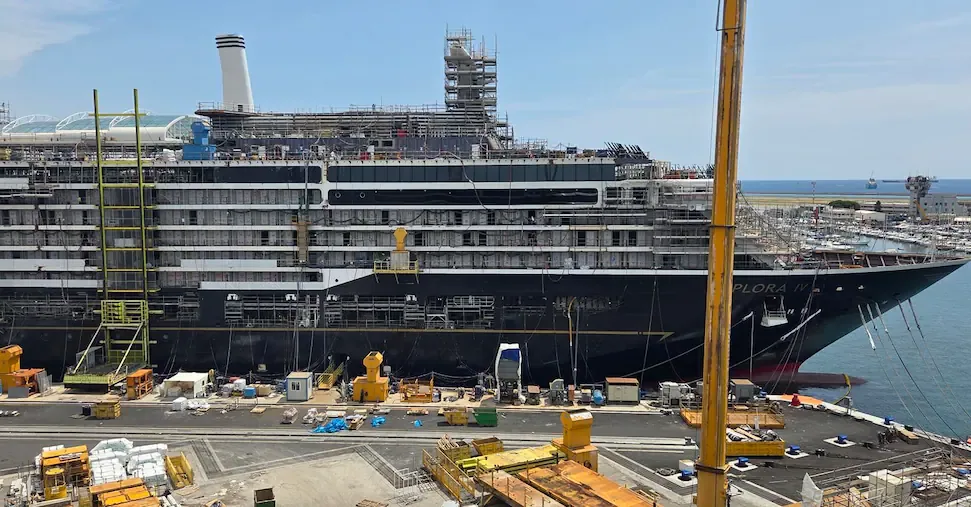
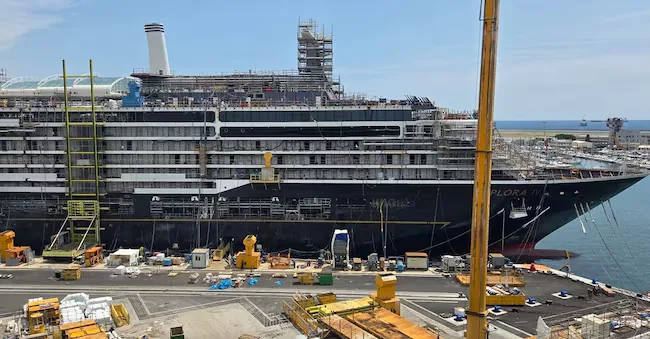
Nuclear power is the future solution for naval propulsion and could also allow part of the merchant shipbuilding, currently carried out elsewhere, primarily China and Korea, to be brought back to Europe. This was stated by Pierroberto Folgiero, CEO and general manager of Fincantieri, on the sidelines of the delivery ceremony to Msc of the cruise ship Explora III, also powered by LNG (liquefied natural gas).
Read more Santa Margherita talks: focus on geopolitics, Europe and new global balances
Ask the Sun
Questions are automatically suggested by 24Ore AI
based on the displayed content.
The manager, speaking about the prospects for new fuels, after LNG, emphasized that «the discussion should be approached from the perspective of the energy transition strategy: probably, in the past, there was a kind of hyper-transition hangover. Today, however, we must not make the opposite mistake, that is, to imagine that the energy transition is no longer a priority. Instead, it is necessary to have a mature vision of decarbonization issues and stay the course. While, until two years ago, only hydrogen was discussed, now hydrogen is no longer discussed: it was wrong before, and it is wrong now. A mature vision means that we must work on the heart of the ship, which is propulsion, with a mix of solutions, which can be short-term, such as liquefied natural gas, other fuels that are always a bridge, such as methanol, specific solutions on hydrogen already developed and, as far as I’m concerned, also nuclear power».
Folgiero then added that, «as always in the energy transition, the true substitute for hydrocarbons is nuclear power; it is clear that, even in the maritime sector, as in other fields, it is something for our children; but we must start, because all great evolutions require courage. It’s not that, because it will take 10 years, nothing should be done today. On the contrary, precisely because it will take a decade, we must act now. Moreover, we are very advanced, both on projects here in Italy, with which we have also spoken with the Government, and in Norway with our company Vard. We want to be at the forefront of those who put a 20-megawatt nuclear reactor on a ship, in such a way that it will need to refuel for 20 years. It will change the industry and, in my opinion, will also allow us to bring back to Europe that part of shipbuilding that has moved away from the EU. So we must not only defend the high complexity that has remained here, but we must think of these technological and paradigm shifts as opportunities for a market share win-back».
Read more Adr, a large business hub in the heart of Fiumicino
Speaking, then, of the Sestri Ponente plant, Folgiero recalled that Fincantieri has established, «right here in Genoa, a partnership with Generative Bionics, the best in Italy in robotization processes. Because we want to make the Sestri shipyard our living laboratory, where our production processes can be a test bench, a trial by fire for new ideas and new technologies for the entire group.
The objective, he added, is to make Sestri «the heart of future high-tech shipbuilding, of the industrial transformation of the ship construction process, which until now has remained nineteenth-century. As Fincantieri, we are working, and we are at the forefront, on a project that ranges from design systems to cobots and robots, with the aim of bringing artificial intelligence into shipyards within the next ten years. And we are ahead of our American and Korean competitors in terms of shipbuilding technology. It is clear that ours is a sector with slow biorhythms, so there are no revolutions but evolutions, which is precisely why it is necessary to have a clear course; and the shipyard gates are wide open for anyone who wants to engage in future manufacturing».
Read more Look at the new euro banknotes and vote for your favorites