








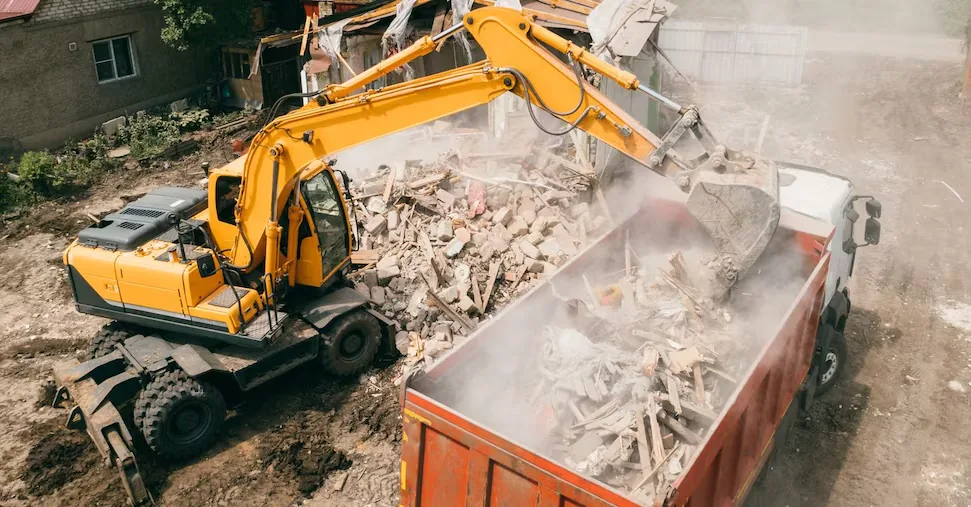
The construction and demolition sector is the main driver of special waste production and alone generated 90.4 million tonnes (52.5% of the national total). Waste treatment and remediation (23.1%), manufacturing activities (15.9%), and other economic activities (8.5%) follow at a distance. This is the picture emerging from Ispra’s Special Waste Report, now in its twenty-fifth edition, according to which in 2024 the overall production of special waste deriving from industrial, commercial, artisanal, service, waste treatment and remediation activities underwent a sharp acceleration, exceeding 172 million tonnes and registering an increase of +4.6% compared to 2023 (approximately 7.6 million tonnes more).
Read more Amendment to the Sports decree-law, closure for swimming pools with non-compliant nozzles
Ask the Sun
Questions are automatically suggested by 24Ore AI
based on the displayed content.
The North’s driving force
Almost all special waste produced is non-hazardous (93.7%), an increase of +4.5% compared to 2023. Hazardous waste stands at 10.8 million tonnes, still registering a more marked increase in percentage terms (+6.0%, equal to 612 thousand tonnes more). As for geographical distribution, the North leads with 56% of production; Lombardy alone produces 36.4 million (21.2% of the Italian figure), followed by Veneto (18 million), Emilia-Romagna (15 million) and Piedmont (13.9 million). Central Italy: 31.3 million tonnes (18.2% of the total). The highest values are recorded in Tuscany (11.5 million) and Lazio (11.2 million). In Southern Italy, 44.3 million tonnes are produced (25.8% of the total); Campania is the region with the highest production in the area with 11.7 million tonnes, followed by Sicily (10.1 million) and Puglia (9.3 million).
Landfill use in progressive decline
The 2024 data on special waste management then show that 187.2 million tonnes were managed in Italy, of which 94.8 were non-hazardous. (177.5 million tonnes). Landfill use is in progressive decline: -2% on 2023, -23.9% compared to 2021. Recovery is the main path: in particular, material recovery accounts for a good 74.3% of management (139.1 million tonnes, an increase of +6.4% compared to 2023). Disposal stops at 13.9%.
Read more Esma: Comporti, the Consob commissioner with strong European experience
Import-export data
The report also highlights that Italy imports 7 million tonnes (mainly metal scrap from Germany and France for our steel mills) and exports 5.1 million tonnes (mainly to Germany). The plant network has 10,563 active plants. Lombardy confirms itself as the national hub, hosting almost 20% (2,068 infrastructures).
Gallone: data confirm path towards an increasingly circular economy model
«The Report’s data, alongside the critical issues related to high production and the uneven distribution of the plant system – commented Maria Alessandra Gallone, president of Ispra and Snpa – confirm the solidity of the path undertaken by our country towards an increasingly circular economy model. The increase in overall material recovery, with important performances in the recycling of construction and demolition waste, demonstrates how innovation and correct waste management can translate into concrete results for the environment and the production system. We must be able to seize these positive signals so that they represent a stimulus to continue along the path of prevention, reuse and recovery of resources, strengthening industrial supply chains and investing in technologies and skills».
Read more Salerno, new orders for Beyonder which produces insulated panels