









From 27%, just over one in four cases, to over 42%, close to one in two. Only a few years have passed since the last pre-Covid summer, but the Unioncamere-Excelsior surveys on the difficulty of finding workers show an epochal leap, leaving little doubt about the worsening of the problem.
Read more Ukraine, today the meeting of the Willing: another 6.1 billion from the EU for defense
Ask the Sun
The questions are automatically suggested by 24Ore AI
based on the content displayed.
If in the past the demand for labor from companies was structurally lower than the supply, resulting in high unemployment rates, the situation is now different. Without wanting to look at areas with low absolute values such as Trentino Alto-Adige and Valle d’Aosta, in Lombardy the unemployment rate fell to 2.8% in the first quarter, more than halved compared to the pre-Covid period.
Demographic decline and youth emigration are creating a new situation, in which it is progressively more difficult for companies to meet staffing needs. And this despite a medium-term downward trend: Istat certifies that between 2007 and 2024, despite an increase of 2.4 million employed in Italy, the manufacturing sector has shrunk by as many as 690,000 units (17%), with the main declines concentrated in the textile-clothing sector and to a lesser extent in other traditional sectors (wood industry, processing of non-metallic minerals, rubber and plastic articles), more exposed to competition from emerging economies.
Read more Excise duty cut until Wednesday, the Government seeks resources for another extension
The missing figures
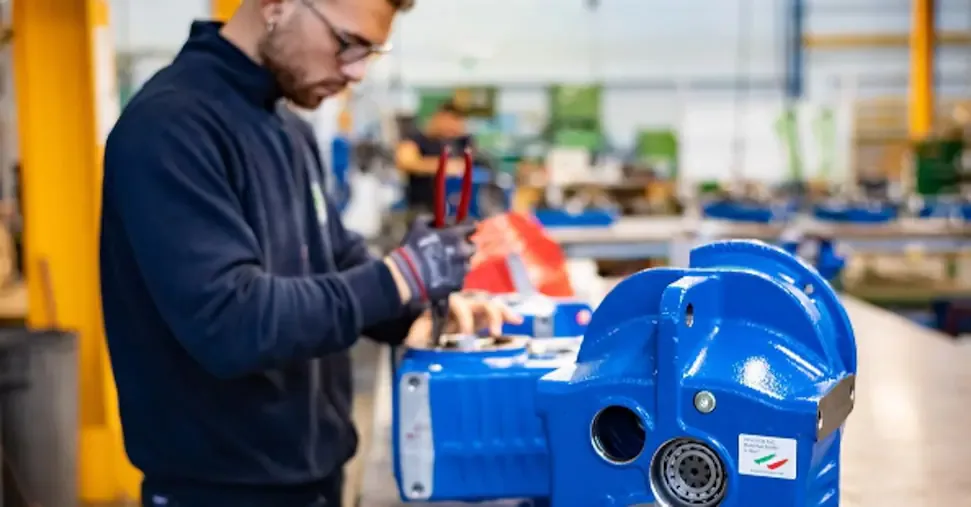
The “hunger” for workers is growing, and in particular the opportunities in STEM degrees are evident looking at the difficulty of finding workers, which ranges between 55 and 65% for engineers and various technicians. Even if the highest peaks, around 70%, are for some specialized factory roles, such as welders, where difficulties in finding the right profile appear in seven out of ten cases. “For us – explains Lombard entrepreneur Miriam Gualini – the search can last even 3-4 months and in any case there are no Italian profiles for welding, it is a job now done only by foreigners. But the problems are elsewhere too: for six months we have been unsuccessfully looking for two technicians to create the drawings to be taken into production.”
Data from the largest temporary employment agency in Italy, Adecco, shows that even among operational figures the shortages are significant: the general metalworker is the most requested figure in every region and the coverage percentages of the sought profiles are in many cases below 50%, among electricians and welders, maintenance workers and mechanical assemblers. For inJob, moreover, the percentages rise to 73% for blacksmiths. And it is no coincidence that some experiments with new technologies for humanoid robots, for example those started by Fincantieri with Generative Bionics in welders, move precisely in this direction, filling activities where company demand structurally exceeds supply. As happens at higher education levels for engineers, as certified by the latest survey from the Politecnico di Milano: 99% of Italian master’s graduates are employed one year after graduation and 95% find work within six months while almost a third are already employed at the date of graduation. Although the “brain drain” abroad is largely minor (88% of Italian students remain in Italy, 70% of international students) the issue of salaries is evident: even in the face of a growing scarcity of these figures, the average net salary is actually decreasing, from 1,944 euros per month in the previous edition of the survey to the current 1,880 euros. Data consistent with the national sample of AlmaLaurea, which sees an average of 1,396 euros for all degrees, slightly down from 1,410 the previous year. Although within the averages different situations are observed.
Read more Pope Leo XIV in Rimini, Bishop Anselmi: aid for Gaza and a soccer field in prison