









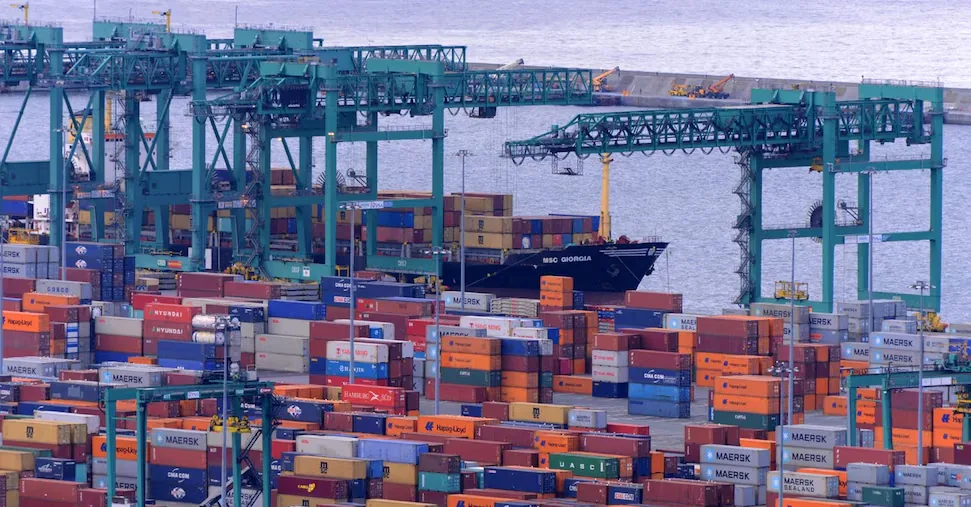
A 4.6% drop in container handling in Italian ports for the first quarter of 2026. This is according to new data released by the Fedespedi Study Center, the National Federation of International Shipping Companies, on the occasion of its annual public assembly, held this year in Genoa, to mark the association’s eightieth anniversary.
Read more Iran’s attack against Kuwait: one dead and 60 injured at the airport
The long wave of the conflict in Iran, with the Hormuz crisis, it was remarked during the meeting of freight forwarders, is also beginning to reach Italy. The analyses of the study center, in fact, highlight the first effects of international tensions on goods flows towards Italy and outline the possible development of new commercial routes. In the first quarter of 2026, container handling in Italian ports recorded, as mentioned, a 4.6% decrease compared to the same period in 2025. The slowdown, according to the Fedespedi report, is particularly concentrated on the Adriatic side, where the contraction of Trieste (-23.6%) stands out, and also affects some Tyrrhenian ports, from Savona (-14.1%) to Genoa (-4.9%). The port of Naples also recorded a slight decrease (-3.5%).
In contrast, the Lsct terminal in La Spezia (+7.8%), Salerno (+7.8%) and Venice (+5.8%) showed growth, while Ravenna remained substantially stable (+0.1%). The Italian figure, the study center emphasizes, moves in the opposite direction to the rest of the Mediterranean basin: the main non-Italian ports in the area have, in fact, handled a total of 8.7 million TEUs (20-foot containers), with an increase of 7.1%, driven by the performance of ports such as Suez Canal Container Terminal (in Port Said), Rijeka (Rijeka) and Mersin (in Turkey). “The contraction in container volumes therefore appears to be a specific phenomenon of the national port system – the report states – even in a context where Italian exports continue to grow, albeit at a more contained pace (+1.3% in the first quarter, compared to +3.3% recorded in 2025)”.
Read more Dua Lipa’s Wedding: Controversy over residents’ posters and ‘mafia’ mud from UK tabloids
However, if we analyze the data also taking into account the type of container traffic in the ports, emphasizes Alessandro Pitto, president of Fedespedi, “we realize that, if we exclude transshipment ports and those in Turkey, all gateway ports in the Mediterranean suffer, even if Spain is doing a little better than Italy. In short, the data show the effects of geopolitical tensions on global traffic, but also the resilience of a sector accustomed to operating in constantly changing contexts”.
The case of Trieste deserves, according to the Fedespedi study office, particular attention. On the container front, the Giulian port “suffers from the reorganization of alliances between shipping companies, which has redesigned routes and reduced transit volumes. On the ro-ro traffic front, however, the port records an opposite signal: in the first quarter of 2026, ro-ro handling (ships for the transport of rolling stock, ed.) coming from Turkey grew by 6.4%”.
Read more A summer of concerts and festivals