








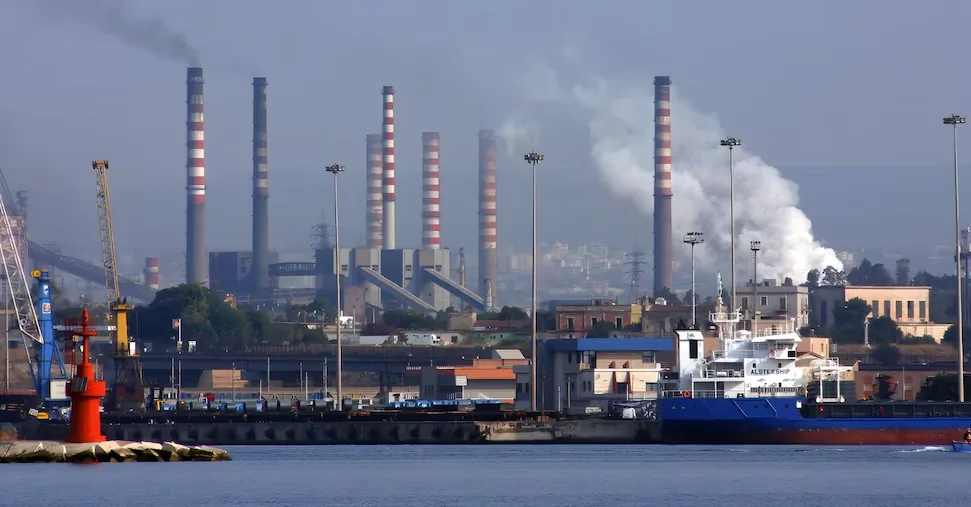
It would cost 830 million to restore the plants in the hot area of the former Ilva of Taranto after their shutdown. This is written by the lawyers of Ilva in extraordinary administration, the company owning the plants, citing the Rina Consulting report in the request with which they return to the Court of Appeal of Milan to again request the suspension of the decree issued on July 27, which ordered the shutdown of the hot area within 90 days expiring on October 26. And this time the suspension request – which was already rejected on September 11 by the Milan judges – is resubmitted with the reasoning that the Court of Cassation has set for October 20, in a month, the hearing of the United Civil Sections to deal with the extraordinary appeals with which Ilva and Acciaierie d’Italia, the latter being the plant operator, ask to “quash” the late July decree (appeals filed last month by the two companies).
Read more Mortgages, rates rise in August. Loans, grow faster for businesses
Ask the Sun
The questions are automatically suggested by 24Ore AI
based on the displayed content.
“It’s a mockery to stop the plants and then be right in the Cassation”
“It would be a real mockery if, at the outcome of the public hearing before the Supreme Court (or in the days immediately following), with the shutdown plan of the hot area plants substantially completed, it emerged that the Cassation appeals of Ilva and AdI are well-founded – write the company’s lawyers -. At that point, in fact, it would no longer be possible to restart the plants but extremely costly and lengthy restoration interventions would be necessary, with the consequent liabilities that could arise from such a situation.” For the lawyers, “the provision setting the hearing date of the Court of Cassation allows reviewing from a completely different perspective the precautionary needs deduced by Ilva and AdI in their original appeals and the balancing judgment to be carried out in relation to the suspension request. Indeed, since it is a matter of waiting a few weeks before knowing whether the decree adopted by the Court of Appeal will withstand or not the objections raised by Ilva and AdI, the serious and irreparable prejudice that the suspension of the hot area activities would cause to the plants certainly justifies the suspension of the enforceability and/or execution of the decree.”
Read more Unical first among Italian universities in the Shanghai Ranking for Computer Science & …
“The citizens of Taranto must wait a few weeks”
In fact, the lawyers continue, the counterparty – that is the citizens of Taranto who have opposed Ilva – is asked for “a sacrifice certainly much more tolerable than the one originally requested, precisely because it is contained in a few weeks of waiting. In other words – the lawyers note -, in the new situation created by the provision setting the public hearing before the Court of Cassation, the prejudice that Ilva would suffer from the execution of the provision is incomparably greater than that which the citizens of Taranto would suffer from having to wait a few more weeks before knowing the (then definitive) outcome of their injunction action.”
Restoration and decarbonization costs are documented
Then citing the figure of 830 million needed to reactivate the plants, Ilva’s lawyers respond to the statement contained in the Court of Appeal’s provision of September 11, which confirms the shutdown ordered on July 27, where the Milan judges say that “Ilva and AdI have in no way documented the costs necessary to restore the hot area plants after their shutdown.” Furthermore, for the lawyers “the statement, which is also found in the Prosecutor’s opinion, that Ilva and AdI did not consider the hypothesis of an ‘adjustment’ of the plants as an alternative (and less costly) solution to their shutdown is not acceptable. First of all, Ilva and AdI produced a note from Rina Consulting to demonstrate that it would never have been possible, within the short 90-day term assigned by the Court for the shutdown of the plants, to remove the asbestos (contained within) present in the plants and obtain a revision of the 2025 AIA with the setting of stricter limits (which would also lack any anchoring to the sector’s Best Available Techniques) for the conveyed emissions of PM 2.5 and PM 10. Moreover, since the asbestos is found in the cowpers (in the 4 heat regenerators that blow hot air over 1,000 degrees in each blast furnace), but only in the gap between the external metal shell and the internal refractory material lining, its removal is only possible by stopping the cowpers (and therefore the blast furnace) and rebuilding them from scratch. This means that if the Court of Appeal’s order is to be respected, there is no alternative practice to the shutdown of the hot area plants.” And again, Ilva’s lawyers highlight in the request to the Court of Appeal, “the statement that the projects for the decarbonization of the Taranto plant” indicated by the companies would refer to “generic and undocumented” arguments is not acceptable since there is the factory’s decarbonization plan that AdI “presented in August 2026 in compliance with a specific requirement
Read more Le OrchiDee, women who cure illness by helping others
of the 2025 AIA.”