




Soon for chemical companies the ETS (Emissions Trading System) will have a cost of 1.5 billion euros per year, up from the current 600 million, all resources that will be taken away from investments. Unless there is a favorable development in the revision of the system under discussion at the EU (the reform proposal is on the agenda for the end of the week), this remains the reality. And the president of Federchimica, Francesco Buzzella, yesterday, on the sidelines of the private assembly, highlighted that “the problem is not competition, but competition between systems that play by different rules. Compared to our competitors, we suffer from regulatory, energy, fiscal, state aid, technological, and commercial asymmetry.”
Read more China, export jump in June: +27% year-on-year. Record trade surplus
Ask the Sun
The questions are automatically suggested by 24Ore AI
based on the content viewed.
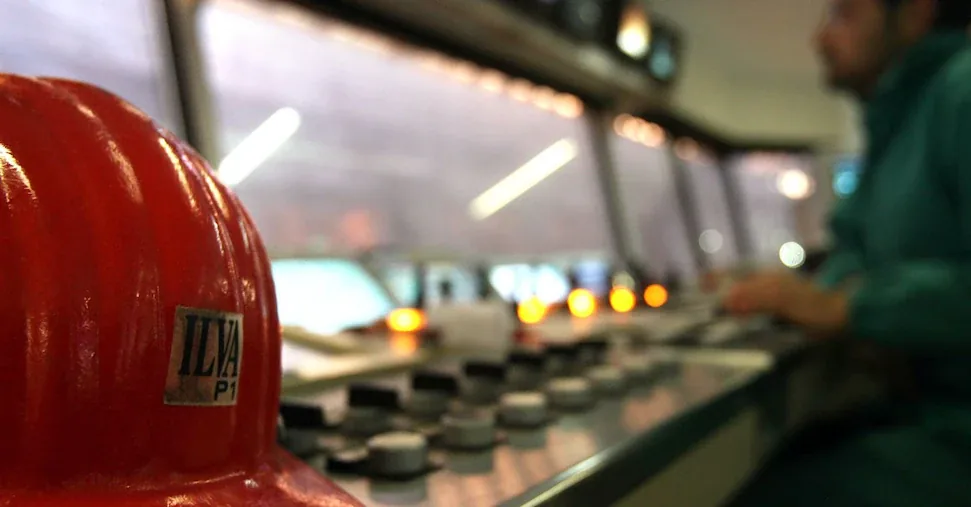
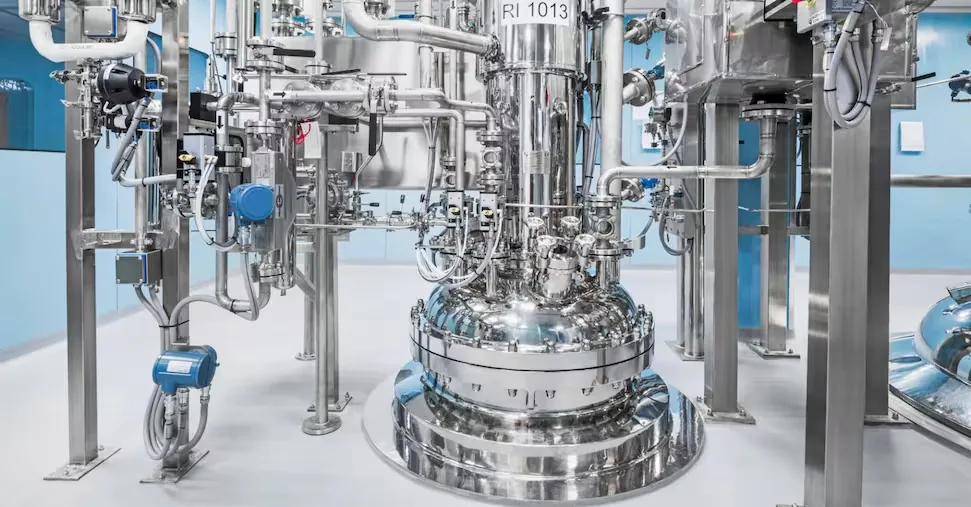
The cahier de doléances of chemical companies is long, but the most critical chapters are titled ETS (emission trading system), energy cost, and bureaucracy. In a sector like chemicals that combines high energy intensity with a strong dependence on natural gas also as a raw material, “energy policies can no longer be read as a component of sustainable transition, but as the strategy to redesign the entire industrial base. The first pillar to be revised is the ETS which imposes a growing cost for Italian chemical companies – explains the president of Federchimica -. Today in Italy the ETS for chemicals alone costs 600 million euros, which is equal to the entire research and development expenditure of the chemical sector. However, the forecast is that the cost will rise to 1.5 billion euros in a few years. These are resources taken away from investments. The CBAM is then the other side of the ETS coin: it currently mainly concerns raw materials, basic products, and some high-carbon semi-finished products, while it is not yet generally applied to finished products. It is also a complex mechanism, still in the settling phase, whose effectiveness has not yet been concretely verified before proceeding with the accelerated phase-out of free quotas. This way we penalize companies twice and encourage them to produce elsewhere. The second pillar is the energy security and diversification policy. The third pillar is the industrial decarbonization policy.”
After in the last 4 years, from 2022 to 2025, according to the study for Cefic (the European Chemical Industry Council) by Roland Berger, plant closures have reduced European production by 9%, there has also been a 90% drop in investments in chemicals. It is not only closures, there is also a decline in the propensity to invest in Europe. It is no coincidence that from the instant survey among 100 member companies it emerged that 27%, almost a third of companies, will reduce investments (7% significantly, 20% moderately), for 31% there will be no change, while the remaining 23% will increase them (20% moderately, 3% significantly). Investments will particularly concern digitalization (35%), efficiency and energy autonomy as stated by 18%, operational efficiency (47%), research and innovation (35%), skills and training (27%), products and markets (15%), and sustainability (10%). “Now it is mostly about consolidation, 360° optimization. But then when volumes are missing, it means giving up part of the production and consolidating it on fewer sites,” interprets Buzzella. The car crisis in Europe is leading to many plant closures and job cuts and is the most visible sign of “European deindustrialization: Europe is dismantling piece by piece the industry that has always been the pillar of European social policies – continues the president of Federchimica -. Europe now has an 8% share of car production, with about 13 million people employed. But as we are seeing, cars increasingly come from Asia. Every car produced in Asia has components produced in Asia. The car crisis therefore generates a double impact, both on the production of goods moving to Asia and on chemical products.” Could tariffs be the solution?
Read more From the Court of Cassation no protection for the count downgraded to “noble” in the Golden Book
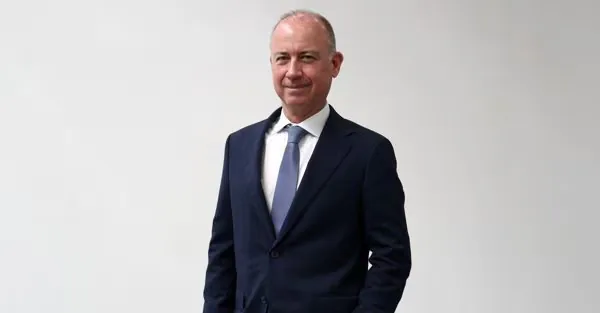
Francesco Buzzella president Federchimica
For Buzzella not exactly, “I am not a supporter of tariffs, they are short-lived measures, but we must become aware of the crisis, reorganize ourselves, have tools that encourage investments, revise levies like the ETS which is totally anachronistic and then we must protect the supply chains. If we let a few years pass, we risk losing important parts of the industry. We must try to protect the industry in the short term and imagine a future in which industry becomes central again. In China, let us not forget that chemicals are among the sectors that have received the most state subsidies.” In Italy, overall, chemical production today is 13% lower than in 2021. Since 2022, the loss of capacity connected to announced closures of European chemical plants has increased sixfold, bringing with it a reduction of 37 million tons, equal to 9% of European production capacity. Looking ahead, chemical production in Italy is expected to further contract in 2026 (-3%) and slightly recover in 2027 (+0.5%). The recovery of industrial demand will struggle, also due to unresolved critical issues caused by asymmetries in energy costs.
Returning to the instant survey, among the major concerns for the consequences on their business, 43% of companies indicate conflicts in Ukraine and the Middle East. However, Chinese competition is by far the main cause of concern, indicated in 51% of cases, a sharp increase from 29% last year. The critical issues do not only come from the external context: as many as 42% of companies indicate burdens arising from EU safety, health, and environmental policies and 30% point to penalties connected to the Italian system, mainly linked to inefficiencies in the Public Administration but also to the judicial system and taxation. Certainly, as Buzzella explains, “the huge disadvantage in energy costs weighs on competitiveness. European natural gas prices are much higher than those in the United States and China. Just think that gas prices in Europe are 3.3 times higher than American levels. In Italy, the situation is even more critical.”
Read more Inps, simpler loans with withholding up to one fifth of the pension: here are the news