









ROME
Ask the Sun
Questions are automatically suggested by 24Ore AI
based on the displayed content.
Read more End of life, vital support necessary to legitimize assisted suicide
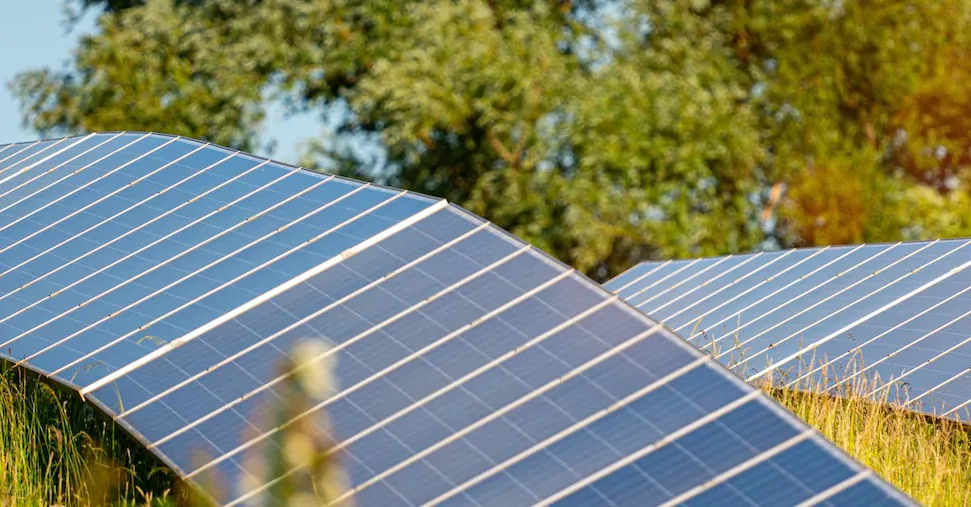
In Italy, photovoltaic systems in factories and shopping centers are increasing, but the installation of solar panels on homes is decreasing. Lombardy is the leading region for installed capacity, followed by Sicily and Veneto. This is according to research by Italia Solare, which examined Terna’s data as of June 30 (see also Il Sole 24 Ore of July 15). This somewhat confirms the delay also highlighted by Eurostat, which noted that the highest percentages of people housed in homes with greater energy efficiency, at the end of 2025, were found in the Netherlands (60.5%), Denmark (34%), France and Slovenia (both at 33.3%), while the lowest were in Italy (2.6%), Malta (7.8%) and Greece (9.5%).Returning to Italia Solare’s data, by mid-2026, 2,255,654 photovoltaic systems were connected across the peninsula, for a total capacity of 46,606 Megawatts. In the first six months of the year, 3,093 Mw of new capacity were connected, for a total of 89,173 new systems. A comparison with the first half of 2025 shows that the residential increase dropped from 725 to 556 Megawatts (-23%). For its part, Commercial and Industrial (C&I) increased from 946 to 1,154 Mw (+22%), while utility scale (power plants) went from 1,137 to 1,383 Mw, an increase of 22%. The photovoltaic market appears increasingly concentrated in medium and large-scale systems. «But the downsizing of systems intended for families – warns Italia Solare – should not be underestimated». In the first half, Lombardy leads both for new connected photovoltaic capacity, with 470 Mw, followed by Sicily (469), Veneto (306), Emilia-Romagna (305), Piedmont (286), Apulia (218) and Lazio (215 Mw). And for new systems, with 13,820 connections, followed by Veneto with 11,233, Emilia-Romagna with 8,039 and Sicily with 7,146. In Italy, electrochemical storage systems are also growing, i.e., batteries that store renewable energy during peak times and release it during off-peak times: by mid-2026, these storage systems had reached a cumulative capacity of 19,334 MWh, a power of 7,983 Mw, and an overall consistency of 943,797 systems. Indeed, 1,350 MWh of new capacity were connected, of which 914 are associated with grid-connected photovoltaic systems and 436 with “stand-alone” systems, i.e., autonomous and not connected to the grid.
Read more Invitalia, the 2025 budget closes with a profit of 9.16 million