








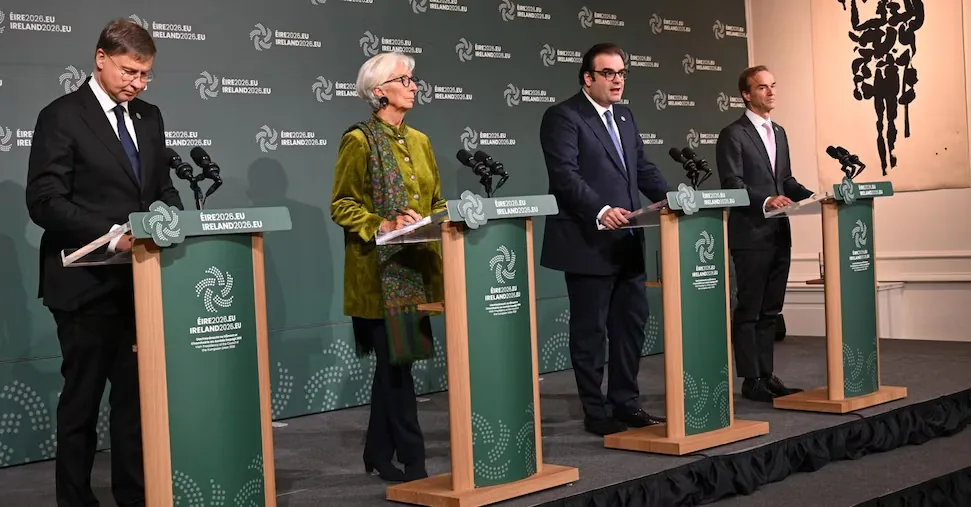
DUBLIN – It is a cautious report on the risks related to artificial intelligence that was presented today, Saturday, September 19, by the International Monetary Fund to the Finance Ministers of the European Union, gathered here in Dublin. Among other things, the international organization explains that in Europe 60% of jobs are exposed to particular risks, more than in other regions of the world. In the field of artificial intelligence, Italy is mid-ranking both in terms of productivity and preparedness.
Read more Energy, Prodi on Radio 24: Schlein’s proposal to Meloni is common sense
Ask the Sun
The questions are automatically suggested by 24Ore AI
based on the content viewed.
“Although – warns the Fund – the potential of artificial intelligence appears significant, the overall implications in terms of productivity, labor demand, inequality, and public finances remain highly uncertain.” In this context, the international organization continues, “it will be essential to manage both opportunities and risks in an agile way, simultaneously and with coordination among various countries.” The IMF’s analysis comes as doubts about the dangers of AI are also growing among companies in the sector.
Artificial intelligence risks calling into question many balances in the labor market. The IMF expects an increase in demand for skilled workers, while more routine professions risk being affected by the advent of new technologies. In terms of productivity, the countries that benefit most from artificial intelligence today are Norway, Luxembourg, and Switzerland. At the bottom of the ranking are Romania, Bulgaria, and Poland.
Read more Chemistry and pharmaceuticals launch an analysis on work and the technological breakthrough
In terms of preparedness to face technological changes, the leading countries are Denmark, the Netherlands, and Estonia. Worse off are Bosnia-Herzegovina, Belarus, and North Macedonia. As mentioned, in the two fields – that is, productivity development and preparedness rate – Italy is more or less mid-ranking, but always behind the other major European Union countries: Germany, France, and Spain.
Among other things, the IMF explains that in Europe 60% of jobs are exposed to particular risks, more than in other regions of the world – the global average is 40%. However, the international organization notes, even for those in highly exposed professions, the impact of artificial intelligence can vary significantly. “About half of the highly exposed jobs are professions where AI can assist workers and increase their productivity.”
Read more From talking cats to Putin’s spy app: this is how Max monitors Russia