







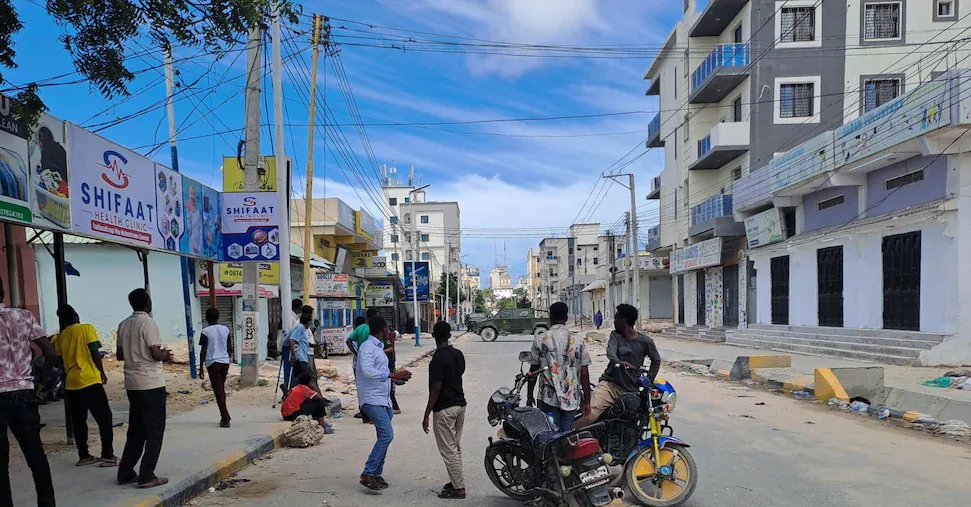
NAIROBI – Somali authorities have declared the restoration of order in the capital Mogadishu, following clashes that spread between June 3 and 4 between local security forces and opposition-linked militias. The violence erupted ahead of protests expected last Thursday against the extension of (at least) one year of President Hassan Sheikh Mohamud’s mandate, a waiver that gained parliamentary support in March and froze a vote scheduled within the year.
The elections were supposed to mark the first national experiment of a vote free from the clanic division that has dominated Mogadishu’s parliament for decades. The postponement has unleashed the opposition’s anger and re-fueled tensions in a country already pervaded by unrest, including the jihadist resurgence of Al-Shabaab, the autonomist impulses of Somaliland and Puntland, and the more general web of tensions dominating the Horn of Africa. The political chaos unfolds just months before the start of Turkish explorations for energy resources off the Somali coast, one of the pillars of Mogadishu’s revival plans as an oil and diplomatic hub between Africa and Southwest Asia.
Accusations against (and by) the opposition
The statement issued by Somali authorities speaks of civilians “returning to normality,” but the tone does not seem inclined towards pacification. The government explicitly accuses two opposition leaders, former Prime Minister Hassan Ali Khaire and former President Sheikh Sharif Sheikh Ahmed, of having deployed “illegal armed groups” and facilitated attacks against civilians, forcing the government to “respond accordingly.” Both have raised counter-accusations, denouncing government forces’ aggressions against the “peaceful” demonstrations planned for June 4 and dispersed after the escalation.
Read more Dmitriev: China could also join the Russia-US tunnel project
Sources cited by Somali media report that Ahmed is still “stuck at a security checkpoint” and that “internationally supported negotiations” are underway after previous ones failed in recent days. The widespread clashes in the capital have drawn condemnation from the African Union, UN leader Antonio Guterres, and the US embassy in Mogadishu, raising the alert level for a country already facing multiple fronts of instability. Among the most evident are the offensive by Al-Shabaab jihadists and the independence drive of Somaliland, the autonomous state that claimed its independence from Mogadishu in 1991 and gained Israel’s endorsement last December. The two crises intersect. “Any crisis benefits groups outside the system, like Al-Shabaab,” explains Omar Mahmood of the International Crisis Group, a think tank. The escalating tensions, Mahmood adds, “prevent addressing other fundamental issues, such as defining the status of Somaliland or resolving tensions within the federal system.”
Read more Radio 24: Capponi, Carone, Roncone, Zafesova guests at Friends and Enemies