





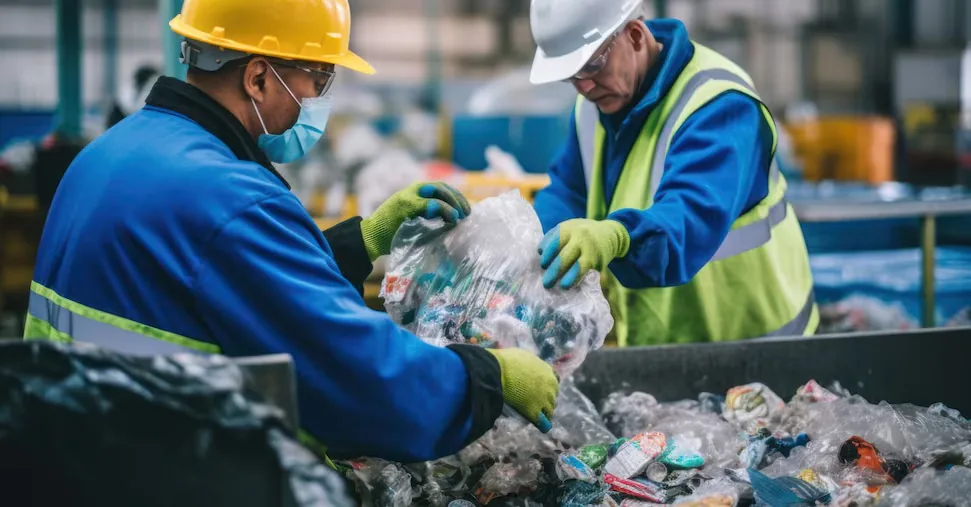
The crisis of plastic packaging recycling, which exploded last year, continues: “The supply chain is now under unsustainable pressure. The accumulation of waste in collection and sorting centers has reached critical levels and risks compromising the continuity of the service. Without urgent and extraordinary measures, the blockage of separate waste collection in large areas of the country is a real risk, partly already manifested,” emphasizes Giorgio Quagliuolo, who returned as president of Corepla, the consortium for the collection, recycling, and recovery of plastic packaging, at the beginning of June.
Ask the Sun
The questions are automatically suggested by 24Ore AI
based on the displayed content.
“Recently in Europe – continues Quagliuolo – 45 recycling plants have been closed and in Italy two plants are already stopped and another two will soon enter revamping, the treatment capacity has decreased. It is a critical moment.” The competition from products coming from non-EU countries at a very low cost and the increase in costs, starting with energy costs, has put companies in difficulty.
The president of Corepla points out that this crisis mainly involves the less valuable fractions of plastic: the mixed polyolefin (polyethylene and polypropylene) and other packaging that is difficult to recycle. Not surprisingly, these are the categories for which this year the Conai consortium, in agreement with Corepla, has approved the largest increases in the environmental contribution, that is the fee producers must pay to ensure a proper end of life for the packaging they place on the market, from October 1st.
Read more Disabled students, early exit discriminatory
For the treatment of packaging waste, the consortia have a subsidiary function by law compared to the market: if the market cannot manage the materials from collection in an economically sustainable way, the consortia are called to intervene, paying recyclers to process those fractions that no one wants, in order to guarantee waste disposal in any case. If the quantities to be treated are greater, the costs will also be higher, which must therefore be borne by the contribution paid by producers.
“We are facing a structural crisis from which it is hard to imagine a way out. The price increases on virgin plastic due to the Hormuz blockade have favored recycled plastic, but it is not enough,” summarizes Quagliuolo, also indicating some solutions: “Increase the authorized volumes of plants, although I fear the times will be long, and, as a last emergency measure, activate energy recovery for non-recyclable flows.”
Read more Municipalities, the Government is late on funds: «July salaries at risk»