









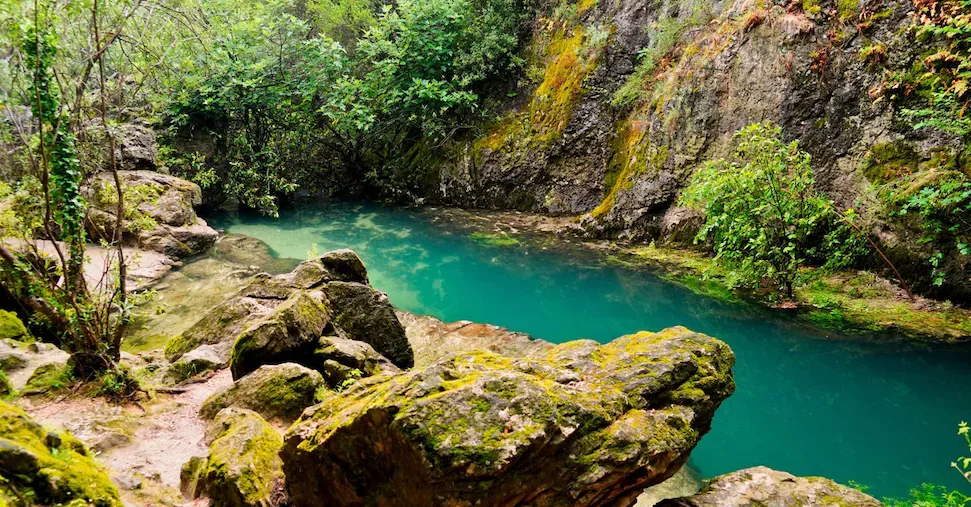
Underground is the blue gold. That is, a sort of mega reservoir capable of supplying almost all the water consumed daily throughout the country. Specifically, groundwater meets more than 84% of the national demand for drinking water. An important natural heritage, since 66% of our territory “is full of real natural reservoirs with medium-high productive capacity” mainly concentrated in the Po-Venetian Plain and along the central and southern Apennines.
Read more European forests are growing, but wood companies depend on foreign countries
Ask the Sun
The questions are automatically suggested by 24Ore AI
based on the content displayed.
2.7 billion cubic meters of water
This is highlighted by the new hydrogeological map of Ispra (40 years after the last major survey) in which 957 large springs with a flow rate greater than 10 liters per second were recorded, from which 2.7 billion cubic meters of drinking water are captured annually, equal to 80% of the spring water used for civil purposes in the country. Also mapped are 60 thousand wells, 241 thermomineral springs, and over 60 points of submarine and coastal springs, today dispersed in the sea but potentially useful for future water supply.
A scientific tool
“The new hydrogeological map of Italy represents a scientific tool of fundamental importance,” emphasizes Alessandra Gallone, president of Ispra, “considering that groundwater is much more resistant to the effects of climate change compared to surface waters, such as rivers, lakes, and artificial reservoirs.”
Read more Zelensky announces a government reshuffle and replaces the prime minister
A thorough survey
The new mapping (the map was created by Ispra Department for the Geological Service of Italy together with the Department of Earth Sciences “Ardito Desio” of the University of Milan, in collaboration with Istat and Cmcc and with the participation of the National System for Environmental Protection, the Regions, the District Basin Authorities, and the entire scientific community of the sector) also includes the thorough survey of the springs of the Po-Venetian Plain, “that is, the springs located between the upper and lower plain, confirming how the Italian underground is very rich in water almost everywhere, with widespread availability and an immense heritage of groundwater resources.”
A constantly updated database
Also included is an online database, “accessible to everyone and constantly updated.” On the horizon, then, “the creation of the National Database of Springs and a Map of greater recharge propensity of aquifers,” designed to identify where to exploit existing natural underground reservoirs to store water during periods of greater abundance, thus limiting the need to build artificial surface reservoirs. “Knowing exactly their location, understanding where they infiltrate and how they flow,” concludes the president, “means putting Institutions in a position to better manage the resource, plan more effectively, and increase awareness of the strategic value of groundwater for the country.”
Read more Glovo and Deliveroo, riders on strike in Florence: «Wages getting lower and lower»