







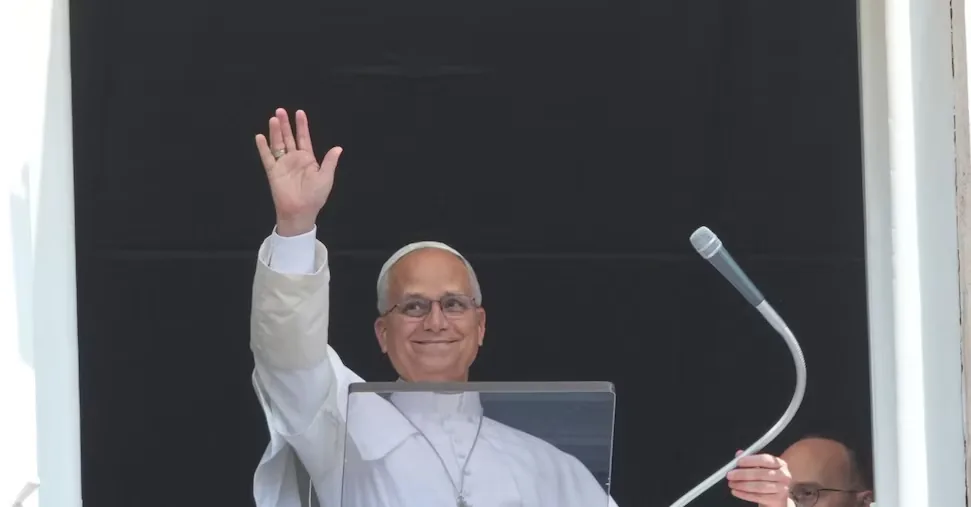
In the Sunday prayer, the Pontiff renewed the invitation to “pray for peace so that wars cease in the world and diplomatic solutions to conflicts are found,” asking to remember the victims of hostilities, “especially the weakest and most defenseless: children, the elderly, the sick.” Leo XIV hoped for comfort for those who suffer and blessed “the work of those who bring help and consolation.”
Read more Lazzarelle, the coop that gives work to female inmates, resists and multiplies
Ask the Sun
The questions are automatically suggested by 24Ore AI
based on the content displayed.
The Forgiveness of Assisi
The Pope then connected current events to a historical anniversary: the forgiveness of Assisi, the indulgence obtained by Saint Francis from Pope Honorius III in 1216, after a vision he had in prayer at the Porziuncola. The reference takes on particular weight this year, the eighth centenary of the passing of the “Little Poor Man of Assisi,” who died at the Porziuncola on October 3, 1226.
Before the Angelus, the Pontiff had developed a reflection on the Gospel of the multiplication of the loaves, read as a key to interpreting the signs performed by Jesus: not simple miraculous gestures, but manifestations of the closeness of the Kingdom of God. To the deaf man who hears again and the blind man who sees again, the Pope explained, the Lord does not only restore a sensory function but a meaning: the announcement of redemption. Likewise, for those who are hungry, the encounter with Christ is “a nourishing experience”: in the gospel episode the crowd eats to satisfaction and twelve baskets remain, a number that for the Pontiff indicates the universality of the divine gift and the constancy of providence.
Read more Over 73 thousand migrants returned from Ceuta to Morocco
Accumulation and waste two sides of the same evil
From here comes the most direct passage of the catechesis: “Christ truly satisfies the hunger of humanity, our hunger for truth and life. At the same time, his gesture teaches us that nothing should be wasted when it is shared.” The Pope defined accumulation and waste as “two sides of the same evil: greed,” a condition that leads to forgetting those who suffer from hunger while resources are wasted elsewhere. The contrast was made explicit: on one side “the opulence of things that rot,” on the other “the outstretched hands of those who have no table” and “the burned houses of those who have no peace.”
The Pontiff pointed to the Last Supper as the culmination of Jesus’ acts of sharing, inviting the faithful to translate the Eucharist into daily practices, starting with the blessing of the table in the family. He closed the reflection with an invitation linked to the summer period: to live the holidays as “a time of fraternal serenity,” involving those in need, and an invocation to the Virgin Mary so that charity may grow “so that no one lacks daily bread.”
Read more Rome will request a hub for migrants in Africa «Albania model»