







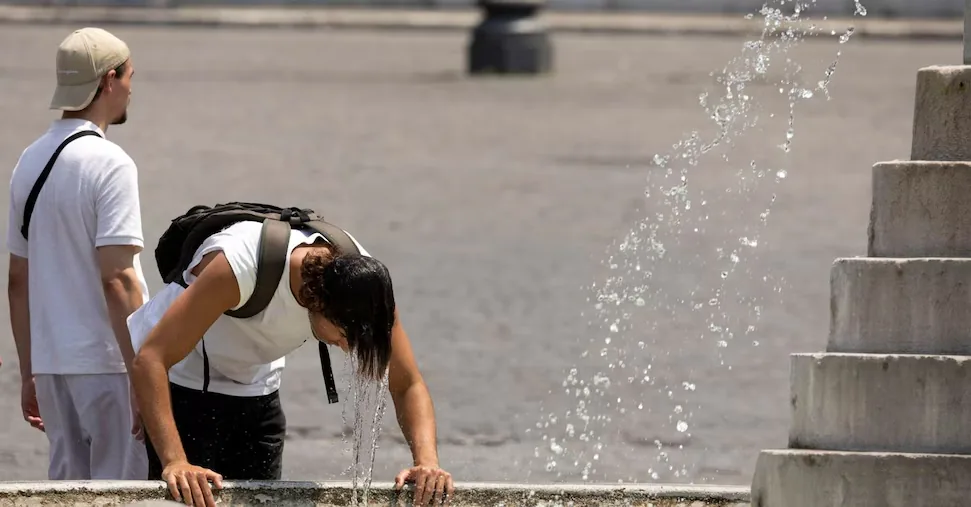
Peaks of over 40 degrees in Florence, Modena, and Terni and “super tropical” nights, with minimum temperatures not dropping below 25 degrees. The fourth heatwave of the year – which began during this week after those that hit the country at the end of May, in the second half of June, and in mid-July – shows no respite for Italy, but the situation is expected to worsen further. Over the weekend, according to forecasts by Lorenzo Tedici from iLMeteo.it, “41 degrees are expected in Terni and 40 in Ferrara, Mantua, Modena, and Parma, values that will persist at least until Monday.”
Read more Earthquake in Naples, 4.7 magnitude tremor at the Phlegraean Fields
Ask the Sun
The questions are automatically suggested by 24Ore AI
based on the displayed content.
Maximum alert
The daily bulletin from the Ministry of Health on heatwaves shows an exponential increase in the number of cities with a red alert, the highest level of warning, indicating emergency conditions with possible negative effects even on the health of healthy and active people, not just the most vulnerable groups. Yesterday there were 11, today there are 19, and tomorrow there will be as many as 23. Among the 27 urban centers monitored, therefore, on Sunday, August 2, only Ancona, Bari, Messina (which will be orange) and Reggio Calabria (yellow) will not be red.
According to the opposition, the government is not doing enough to curb the effects of climate change. In a video posted on her social pages, PD leader Elly Schlein emphasized that “cities cannot be abandoned to inaction, to the inertia of a government that is underestimating how real and unfortunately concrete the impact of the climate emergency is.”
Read more Sicily, the private capital that restarts the places
The heat recorded in recent days across Italy, according to Schlein, “is not normal. And no, we should not get used to it as the right-wing says. We must prepare. Already 12,000 deaths in Europe have occurred due to this latest heatwave and unfortunately the climate emergency continues to claim victims in our country as well. Think especially of the elderly who are afraid to leave their homes in this heat: this is also urban safety.”
Wildfires
The wildfire emergency is also intensifying. According to data released by Ispra, the Higher Institute for Environmental Protection and Research, during the second ten days of July, the areas of Europe affected by fires increased significantly: about 225 square kilometers per day, as if about twice the surface area of Paris burned every day.
Read more Schengen, the special status of Ceuta and the precedents of suspension