








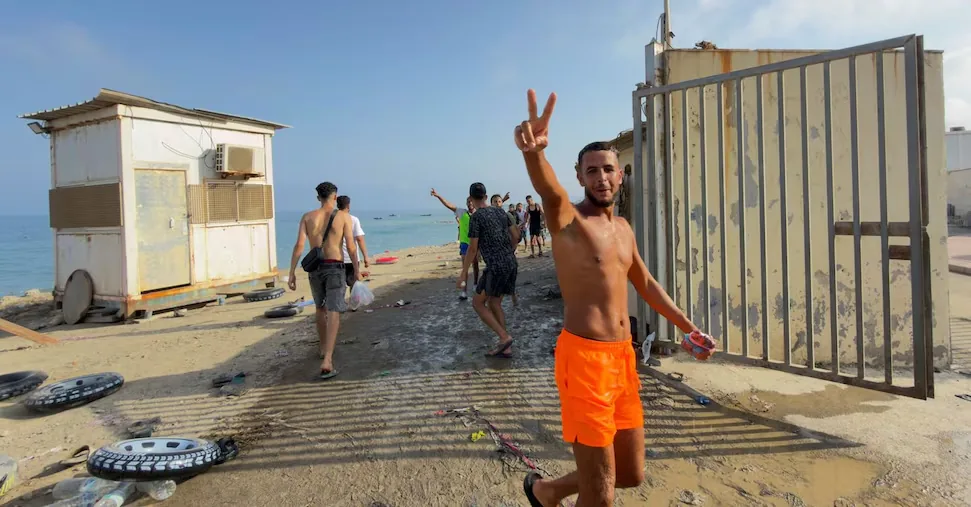
Moroccan security forces did not even try to stop the avalanche of people who within a few hours – first by sea, then crossing the border by land – reached Ceuta, the gateway to Europe in Africa.
The situation suddenly deteriorated, with thousands of people pouring into the Spanish enclave in broad daylight, running towards the double border barrier. The crisis recalls the one experienced in May 2021, when at least 8,000 North Africans entered the Iberian autonomous city in Morocco. Now Madrid is ready to mobilize the army to deal with the situation.
Read more Bipartisan appeal: yes to the anti-extremist runoff
Ask the Sun
The questions are automatically suggested by 24Ore AI
based on the content displayed.
And while Brussels follows the evolution of the crisis and assures maximum commitment to protect the EU borders, sources from Palazzo Chigi in Rome say the government is considering suspending Schengen with Spain. The first to raise the alarm was the president of the enclave, Juan Jesus Vivas, denouncing the migratory pressure in the last week with the arrival of 1,500-2,000 people swimming, at a rate of 300 per day. “We are facing an absolute humanitarian and social emergency,” repeated the governor, who asked Madrid to declare a national state of emergency, establish a unified command, and strengthen security forces with the deployment of the army to defend the “security of citizens.”
Read more Incentives in Sicily, the Administrative Justice Council unlocks the calls for tenders
The Ceuta Assembly unanimously approved a motion urging the temporary closure of the border with Morocco as an “urgent and unpostponable” measure for what has been defined as “the most serious crisis in recent years.” Behind the new migratory wave are poverty, lack of prospects and expectations fueled by social networks, along with the window of opportunity represented by good weather and calm seas, just a step from the Strait of Gibraltar. But not only that. “They find no legal routes. Their only option is to throw themselves into the sea and enter Ceuta,” says Ismail El Makdoubi, immigrant and president of the Exmenas association. According to the activist, the recent ruling by the Spanish Supreme Court, which excludes immediate pushbacks for those who reach the enclave by swimming, has fueled, along with traffickers’ networks and the online buzz, the belief that crossing the border is now easier. “We feel abandoned, without protection. Thousands of migrants are on the streets and wander without knowing where to go,” is the voice of Ceuta residents describing the scale the crisis is reaching in these hours, with numerous people missing at sea and the Civil Guard having recovered at least nine bodies of drowned persons.
Spanish authorities do not provide official estimates of migrants who have entered. “The human avalanche already reaches 5 kilometers at the border,” according to the Tve correspondent. The Spanish government president, Pedro Sanchez, will be in Ceuta tomorrow, along with the Interior Minister, Fernando Grande-Marlaska, to verify the situation on the ground. This is learned from Moncloa sources.
Read more Fires, why the alert on the smartphone is not enough