









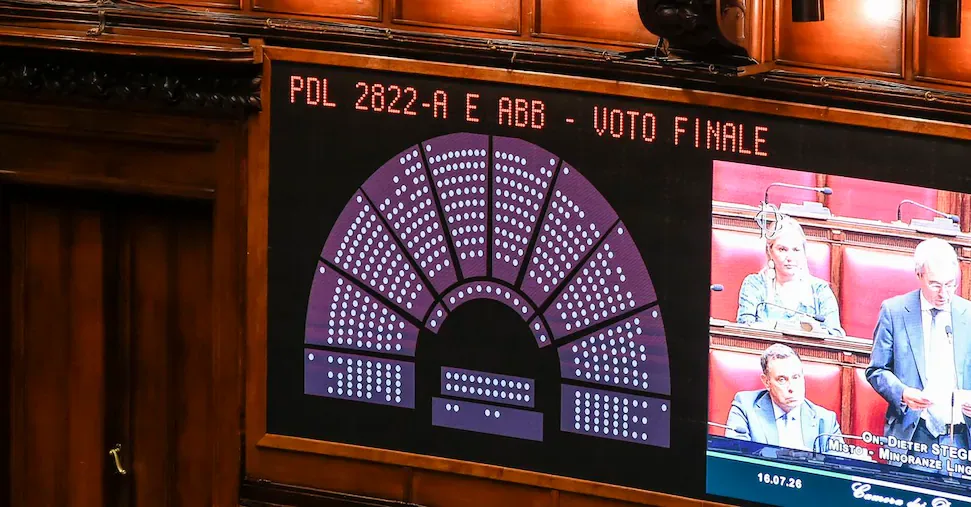
Preferences yes, preferences no. When talking about electoral law reform (and since 1994 there have already been three: Porcellum, Italicum, and Rosatellum) the topic always resurfaces. The same fate has also befallen the current ongoing reform of the electoral law Stabilicum/Melonellum. If we look at how other EU countries behave, based on monitoring carried out by Pagella Politica, in 20 out of 27 states a system based on preferences is used. Although, among those excluded are all countries comparable in size to Italy (Germany, France, and Spain).
Read more Sideralba (steel pipes) grows and acquires 51% of Sidergalbiati
Ask the Sun
The questions are automatically suggested by 24Ore AI
based on the content viewed.
Who uses preferences
In the European Union, according to what Pagella Politica has reconstructed, “the countries that in their electoral law allow voters to express preferences are Austria, Belgium, Bulgaria, Croatia, Cyprus, Czech Republic, Denmark, Estonia, Finland, Greece, Ireland, Latvia, Lithuania, Luxembourg, Malta, Netherlands, Poland, Slovakia, Slovenia, and Sweden.” Extreme cases of preference use, for example, are those of Latvia and Luxembourg. In Latvia negative preference is also possible: the voter votes for a list of candidates and on the list can add a positive vote for one candidate and add a negative vote for an unwanted candidate. In Luxembourg, each voter has as many preference votes available as there are seats in the constituency (for example 23) and can vote for an entire list or individual candidates even on different lists, giving up to two votes to the same candidate
Read more Greece, young farmers are here. The problem is convincing them to stay
The big countries
Germany, France, and Spain, however, do not have a system with preferences. In Germany, each voter has two votes: with the first vote the voter chooses a candidate in their single-member district, while with the second they vote for the party list. It is this second vote that determines how many seats each party gets overall in the Bundestag. In France the deputies of the Assemblée nationale are elected every five years with a two-round single-member majority system. The Spanish electoral system provides provinces as constituencies, closed lists, and a 3% threshold. However, except for Madrid and Barcelona, on average the closed lists are very short (3-5 names) ensuring a closer elected-voter relationship
Read more Yes to the seizure of the CEO’s smartphone with generic keywords