
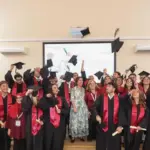


Peace as the civil infrastructure of the Nation, founded on security, justice, health, love, work, freedom, knowledge, truth, quality of information, development, and trust in institutions. An infrastructure that must be built, maintained, and defended, with courage, day by day, through shared responsibility and the ability to make different but complementary worlds dialogue. The theme of peace was at the center of the fourth edition of “The Courage of Peace by Remind,” the initiative promoted on Wednesday, September 16 by Remind – Association of Good Practices of the Nation’s Productive Sectors, held in Rome at the Salone del Commendatore in Borgo Santo Spirito. The event was opened by Paolo Crisafi, Knight Grand Cross and President of Remind: “With the fourth edition, we want to renew a commitment that we feel is even more necessary: to create a space where government, parliament, institutions, businesses, professionals, and civil society can meet and recognize themselves in a common responsibility, even starting from different sensitivities and positions.
Read more Benefits, a treasure of 46 billion wasted
Ask the Sun
The questions are automatically suggested by 24Ore AI
based on the content displayed.
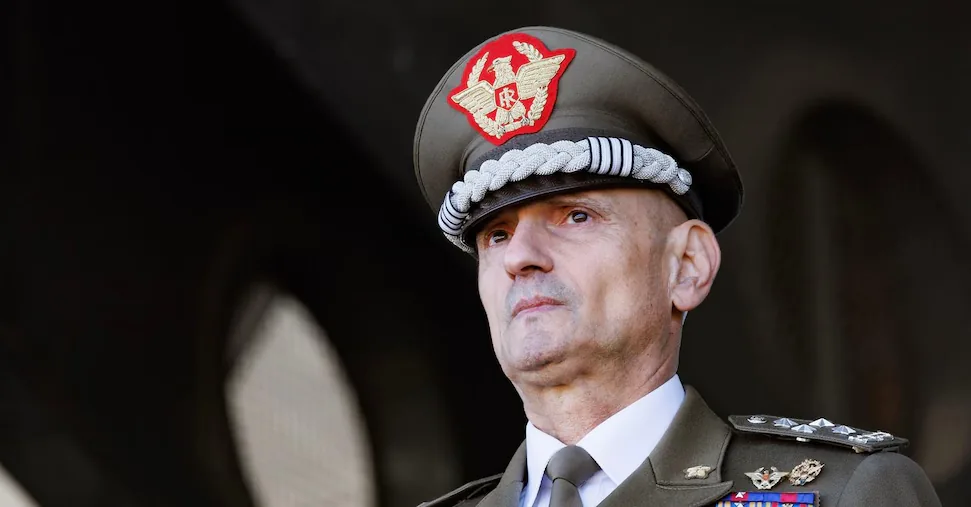
Chief of Defence Staff Portolano: “Peace is not a definitive achievement”
Among the people who took part in the meeting, in the panel dedicated to “Peace Operators: love, justice, freedom, and truth,” was General Luciano Portolano. The Chief of Defence Staff went straight to the heart of the matter. “Peace and stability,” he emphasized, “are not definitive achievements. They are not inherited: they are built and defended, day after day, with difficult and sometimes unpopular choices. Building peace requires great courage. And the first act of courage,” he added, “is to look at the world for what it is, not for what we would like it to be. It is in this scenario that the invitation of our Holy Father fits: to disarm technology. I welcome it and allow myself to associate it with words that many in this room know better than I do: Pope Leo speaks of a peace that is ‘disarmed and disarming.’ As a soldier, those words do not sound like a reproach to me, but they raise a question: in what way, in our profession, can we disarm technology?” A difficult question, to which the Chief of Defence Staff gave his answer: “My answer is clear,” he stated, “ensuring that decisions are made by humans; with their intelligence, judgment, and conscience. Because no artificial intelligence system, no matter how fast and accurate, can replace a human being in deciding whether or not to take an action.” From here, the conclusion of the reasoning: “Renouncing war,” Portolano recalled, “does not mean ignoring it, it means knowing it well enough to be able to prevent it.”
Health Minister Schillaci: “Health is an extraordinary instrument of peace”
Health Minister Orazio Schillaci expressed the value of peace in its social and health dimension. “Peace does not only concern relations between States,” he emphasized. “It is an essential condition for people’s lives, for the well-being of communities, and for the protection of fundamental rights. Among these, the right to health holds a central place. Conflicts produce profound and lasting consequences on the health of populations: they destroy healthcare facilities, interrupt access to care, worsen the conditions of the most vulnerable, and leave physical and psychological wounds that can be passed on to future generations. For this reason, health is, in turn, an extraordinary instrument of peace. Taking care of people means building trust, promoting solidarity, and strengthening the bonds that hold our communities together. The National Health Service represents, in this perspective, one of the most concrete expressions of the values of solidarity and cohesion on which our Republic is founded. Guaranteeing every person the possibility of being treated, without discrimination, means affirming every day the principle of human dignity, which finds its full recognition only in a situation of peace,” Schillaci concluded.
Read more Sweden, the center-left wins in a photo finish: Andersson ahead by three seats, Kristersson …
Sberna: “Disarming means intervening on arsenals but also on words”
The discussion expanded to the European dimension, with the intervention of Antonella Sberna, Vice President of the European Parliament: “Peace,” she emphasized, “requires courage and we are used to associating courage with those who fight, who resist, who do not retreat, even in our imagination. However, it also sometimes takes courage to stop, reflect, listen to the reasons of the other, and try to find a solution. This is the homeland of compromise, the European Union. In short, we also learn from this, because peace is not only the absence of war: it is a daily choice, a concrete commitment,” she continued, “that arises from the ability to recognize each other, to dialogue, and also to know how to build together. Pope Leo XIV called us to a peace that is disarmed and disarming, humble and persevering. It is a very, very current message. Disarming does not only mean intervening on arsenals, but also on words, on oppositions, and on everything that feeds divisions and conflicts. It means putting the person, their well-being, and their security at the center, building a true culture of collaboration and community.”
Loiero: “Peace is an infrastructure of development”
Renato Loiero, Advisor to the Prime Minister, focused his intervention on the economic and social prospects of peace. “Peace, besides being a universal value, is a true infrastructure of development,” he recalled, “it generates trust, attracts investments, stabilizes markets, and allows businesses and families to plan for the future. Recent geopolitical crises have shown us how wars, energy shocks, and trade barriers directly affect the real economy, redefining the very concept of economic security. Today, alongside the search for efficiency, resilience, diversification of supplies, and strategic autonomy are added. It is essential,” Loiero continued, “to avoid that the necessary de-risking turns into protectionism and de-globalization. For Italy, this scenario requires working simultaneously on the solidity of public finance, productivity, human capital, innovation, and energy security. Technology also places a new responsibility before us: we must not slow down innovation, but govern it so that it remains at the service of development. Likewise, greater attention to defense must be aimed at strengthening research, European industry, and strategic infrastructures, with a clear goal: to defend stability, not to fuel conflict. Ultimately,” he concluded, “peace is the greatest long-term investment we can make: dialogue, diplomacy, and cooperation remain the indispensable prerequisites for building lasting well-being.”
Read more Garlasco, corruption charges against former prosecutor Venditti dismissed: he did not favor Sempio