







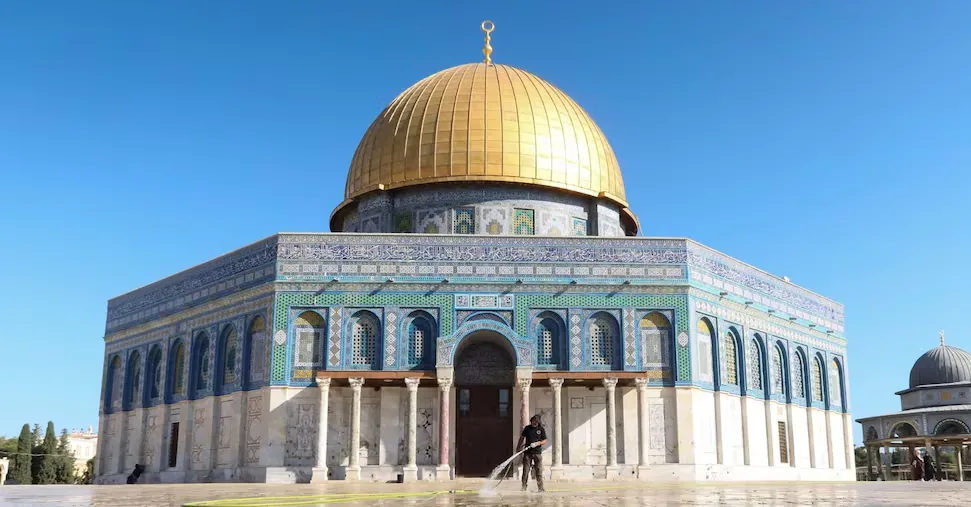
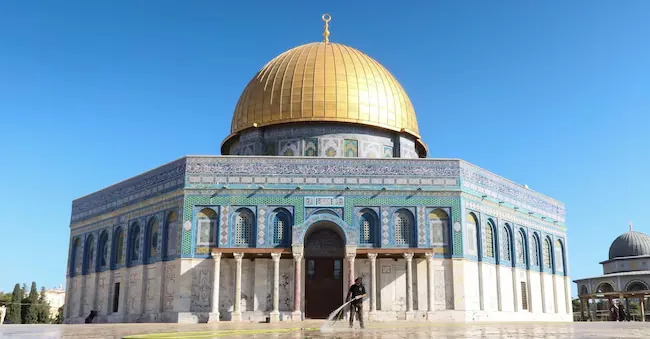
In the heart of the Old City of Jerusalem, on a plateau of about 144,000 square meters, two names and two religious geographies coexist. For Muslims, it is Al-Aqsa, or al-Haram al-Sharif, the Noble Sanctuary, the third holiest site in Islam after Mecca and Medina. For Jews, it is Har HaBayit, the Temple Mount, the holiest place in Judaism, where the two ancient Temples of Jerusalem once stood. For everyone, it is one of the most sensitive points in the Israeli-Palestinian conflict.
Read more Factory 5.0: the industry of tomorrow
Ask the Sun
The questions are automatically suggested by 24Ore AI
based on the content viewed.
The complex is located in the Old City, in East Jerusalem, captured by Israel during the Six-Day War in 1967 and subsequently annexed. The annexation is not recognized by the United Nations and most of the international community. The Palestinians claim East Jerusalem as the capital of a future state.
Since 1967, the Islamic Waqf of Jerusalem, supported by Jordan, has administered the complex, with the Israeli police controlling security and access. According to the status quo maintained after the war, Muslims can pray on the plateau, while non-Muslims can visit it at certain times but cannot hold their own worship there. The 1994 peace treaty between Israel and Jordan also recognizes the “special role” of the Hashemite kingdom in the Muslim holy sites of Jerusalem.
Read more Wealth of Italian families, record growth of inequalities: the richest 5% owns half of …
Israeli Minister of National Security Itamar Ben-Gvir has visited the site several times reaffirming the right of Jews to pray on the Temple Mount. Last July, the man, a far-right figure, visited the place openly celebrating the fact that Jewish visitors were praying on the plateau, in violation of the status quo rules. Jordan and the Palestinian authorities denounced the episode as a violation of the agreements. Several times, Prime Minister Benjamin Netanyahu had instead reiterated that the official Israeli policy on the site had not changed.
Often the name “Al-Aqsa” is used to refer only to the gray-silver domed building located in the southern part of the plateau. But in Islamic, Palestinian, and Jordanian lexicon, “Al-Aqsa” can indicate the entire sacred enclosure, al-Haram al-Sharif: about 144,000 square meters that also include the Dome of the Rock, with its golden dome, as well as courtyards, gates, and other religious buildings.
Read more Migrants, Schengen block with Spain extended by 15 days. Interior Ministry: «The risk remains»