








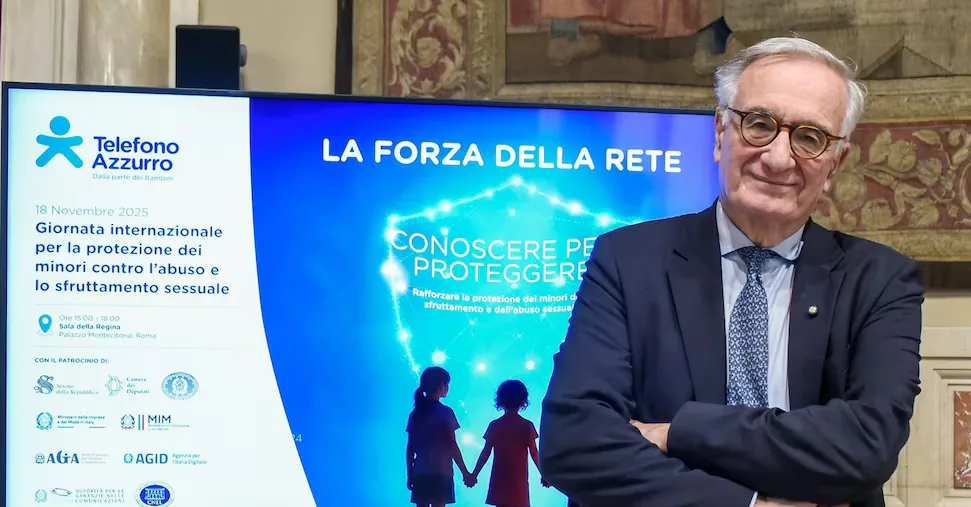
Putting the best interests of the minor at the center of the development of Artificial Intelligence, so that technological innovation, protection of rights, and human dignity proceed together. This is the position brought by Telefono Azzurro to the international discussion promoted by the United Nations on September 4 and 5 in Rome at the Pontifical Gregorian University, attended by the Foundation’s president, Ernesto Caffo.
Read more Alberto Fassi: «To do business, never stop dreaming»
Ask the Sun
The questions are automatically suggested by 24Ore AI
based on the content viewed.
The meeting in Rome
The Rome appointment was the fourth meeting in a global series dedicated to Artificial Intelligence and human development, following those in Cairo, Mexico City, and Xi’an. Convened under the leadership of the United Nations Deputy Secretary-General Amina J. Mohammed and hosted by the UN Office for Partnerships, the discussion brought together thought leaders, public decision-makers, technology experts, academics, religious representatives, and development professionals around three major dimensions: AI and Human Civilization, AI and Human Development, and AI and Human Dignity.
The role of human rights
During the sessions, the effects of AI on education, learning, human relationships, trust, and social cohesion were explored, along with the need for governance, institutions, and ethical principles to keep pace with the rapid technological change. A debate that the United Nations linked to the need for an approach based on human rights, inclusion, and respect for human dignity.
Read more Trump shakes Ireland: «I would like to see it united»
Child protection
In this context, Caffo emphasized the need to also look at Artificial Intelligence from the specific perspective of childhood and adolescence. For Telefono Azzurro, protecting the youngest cannot be entrusted solely to the ability of children, adolescents, or their families to defend themselves from risks, but must be incorporated into the design and governance of technologies according to a Child Rights & Safety by Design approach. “We cannot allow the development of Artificial Intelligence to proceed faster than the ability to protect children and adolescents: safety and protection of minors must be considered from the design of systems, not added afterwards,” said Ernesto Caffo, President of Telefono Azzurro.
AI governance
The Rome discussion is part of the broader international process promoted by the United Nations on AI and human development, which will continue within the framework of the 81st session of the United Nations General Assembly. The series contributes to global reflection processes on Artificial Intelligence governance, from the Pact for the Future to the Independent International Scientific Panel on Artificial Intelligence, aiming to strengthen international cooperation and guide technological development in the service of people.