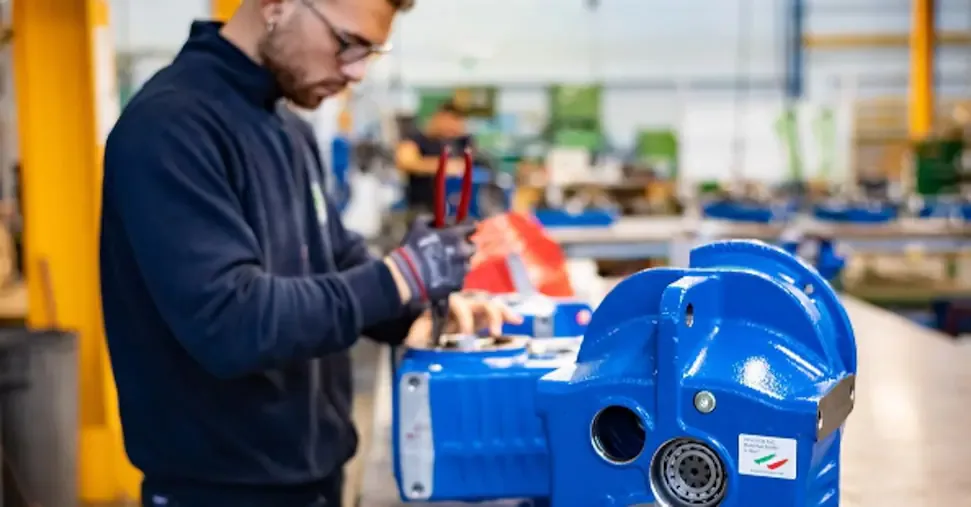








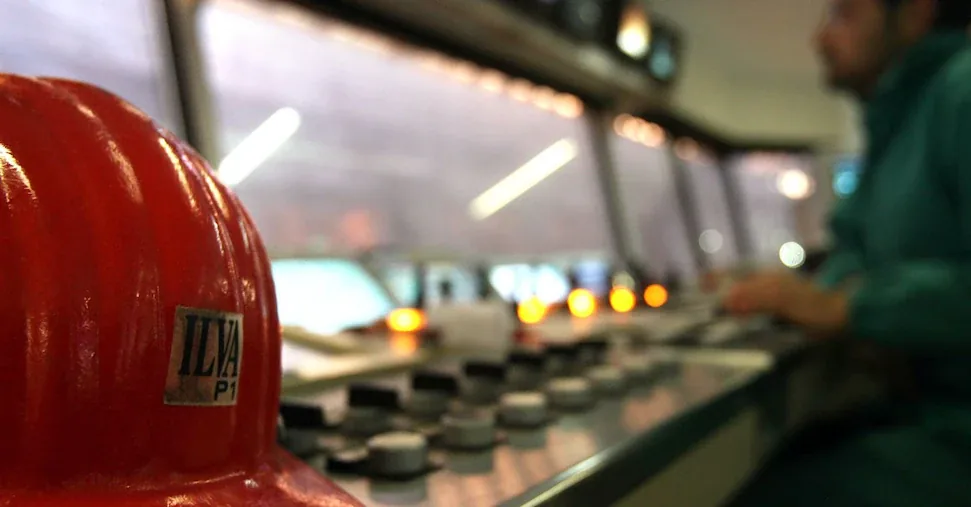
Now that the Milan Court of Appeal has confirmed, with an order issued on September 11, that the hot area of the former Ilva in Taranto must stop by the end of October because it pollutes and is harmful to health, it will be necessary to implement a plan that, proceeding step by step, addresses the various and complex problems that such a stop causes. The Government has announced that the unions are summoned for Tuesday at Palazzo Chigi and at that meeting the first moves and commitments of the Executive will probably be understood. The former Ilva “is one of the files on which we are spending the most hours,” said Prime Minister Giorgia Meloni announcing the imminent reconvening of the table.
Read more The real risk of longevity? A public finance crisis
Ask the Sun
The questions are automatically suggested by 24Ore AI
based on the content viewed.
Towards an increase in redundancy fund
It is also obvious to say that a factory that will no longer be able to produce, having its “engine” – the hot area of Taranto – turned off and therefore unable to feed everything downstream, including the plants in the North, will no longer be able to keep almost 10,000 employees currently constituting the direct workforce at work. Today the former Ilva has an extraordinary redundancy fund authorized by the Ministry of Labor for 4,500 units of which 3,800 are in Taranto. This is the maximum ceiling set, but the actual use is lower. In Taranto, for example, union sources say about 3,000 workers are on redundancy fund. Now, by stopping the hot area, these numbers will inevitably rise. Since in addition to turning off blast furnace 2, which is currently in production, blast furnaces 1 and 4, which are not producing but are still kept in preheating (they do not produce because 1 is under seizure for a fire that occurred in May 2025, a seizure confirmed last June by the Court of Cassation, and 4 has been subjected to works), will also be turned off. Steelworks 2 (steelworks 1 is already stopped) and other connected plants will also stop. To the direct workers, the entire world of indirect workers must then be added. That is, the employees of the many companies that provide the former Ilva with work, maintenance, supplies, transport, and various services. It will be a problem of numbers, which will inevitably be significant, but also of financial coverage that will need to be found to cope with the increase in redundancy fund. Meanwhile, a business association, Aigi, has already declared that 2,500 collective layoffs by 28 associated companies are restarting. Layoffs communicated on September 4, stopped on the 8th after the summit at Palazzo Chigi and restarted on September 11. But, beyond this, the numbers of the new redundancy fund are not yet available, nor have they been communicated, both because judicial developments were awaited and because it will be necessary to decide what to actually do.
What will work and who will remain active
Regarding the direct former Ilva workers, part of the workforce will remain in the factory for activities of guarding, surveillance, and security of the plants even if inactive. It is estimated that they could be between 500 and 1,000, but we will see. Instead, the entire downstream part of the hot area, called the cold area, can operate, although the more correct term is rolling area. This is divided into hot rolling and cold rolling. The first transforms steel slabs into coils or sheets; the second performs further treatment of the coils, reducing their thickness or coating them. The first area includes strip mills, strip finishing – which is an extension of the mills – and the sheet mill. The second includes pickling, tandem mill, and annealing. The company’s customers either buy the coils directly or request that they be further processed or cut into sheets.
The cold area is not burdened by any judicial constraint. It can run and therefore produce, but on two conditions: that it has an external supply of steel slabs, since the steel plant will no longer be able to produce them, and that it acquires from the grid the electricity necessary for the plants, considering that the power supply from the factory’s power plant, in turn powered by the hot area activity through energy recovery, will be lost. External supply of slabs already occurs. Last month, on the sidelines of the table convened by the Minister of Enterprises, Adolfo Urso, to explore the possibility of setting up a consortium of Italian steelmakers for the former Ilva, Antonio Marcegaglia, head of the homonymous industrial group and customer of the Taranto steel plant, expressed willingness to supply the site with slabs so as not to completely break production continuity. And in recent hours a ship with a load of slabs from Metinvest, a Ukrainian steel group, arrived at the port of Taranto.
The unions: but limited contribution from the cold area
Union sources say that the cold area, with all plants running, absorbs about 1,600 people, but currently the sheet mill, the cold rolling mill, the Erw pipe mill, and strip mill 1 are inactive. The staff is on redundancy fund. Instead, strip mill 2 and strip finishing are active. Strip mill 2 runs intermittently, union sources say, based on the slabs produced and those arriving from outside. Between strip mill 2 and strip finishing, about 400 units are working. Starting from what exists, that is the cold area, and then progressively seeing the rest, including the possible installation of an electric furnace, is also what the president of Confindustria, Emanuele Orsini, hoped for days ago.
Read more 2027 Budget, proposals for young people: flat tax, tax incentives, academic merit income