










Sixteen thousand tons of oil still in warehouses at the end of July, a new campaign on the horizon, and a processing structure that includes over 600 mills. For Sicilian olive growing, the game is no longer just about the quantity and quality of production, but about the ability to turn them into value: more efficient plants, technology, aggregation among operators, services, and greater commercial strength. A decisive step for a region that produces about 12% of Italian oil, compared to 51% from Puglia, but has a network of mills numerically not far from that of the leading region.
Read more The ECB raises the cost of money by 25 basis points, deposit rate rises to 2.50%
Ask the Sun
The questions are automatically suggested by 24Ore AI
based on the content viewed.
The weight of the supply chain and the issue of stocks
The market arrives at the new campaign with stocks decidedly higher than a year ago. As of July 31, Italy held 233,377 tons of olive oils, 43.9% more than the same period in 2025. Sicily concentrated 15,908 tons, of which 9,950 were extra virgin. The comparison reflects the different sizes of the main producing regions: stocks reached 73,559 tons in Puglia and 29,735 in Calabria.
It is in this scenario that from today (September 10) to September 12 in Mondello returns L’Isola del Tesolio 2026, promoted by Oro Sicilia, Cofiol, and Oleifici Barbera with the support of the regional Agriculture Department. Three directions: integration and supply chain solidarity, innovation and training, internationalization and commercial development.
Over 600 mills, the challenge is to innovate
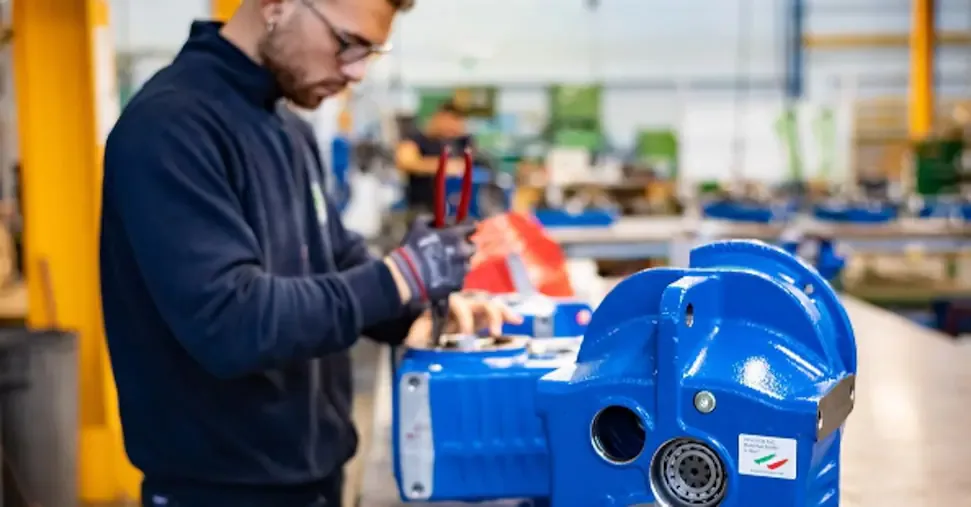
The real industrial issue is that of processing. Sicily, with 616 active mills, is third in Italy after Puglia, with 746, and Calabria, with 718. A widespread network, which represents a strength but also poses a problem of plant size, efficiency, and investment capacity.
The PNRR allocated 12.69 million euros to the Region for the modernization of processing, storage, and packaging plants and to improve their sustainability and efficiency. The allocation was subsequently indicated by the Region at about 13.5 million, with 45 projects funded.