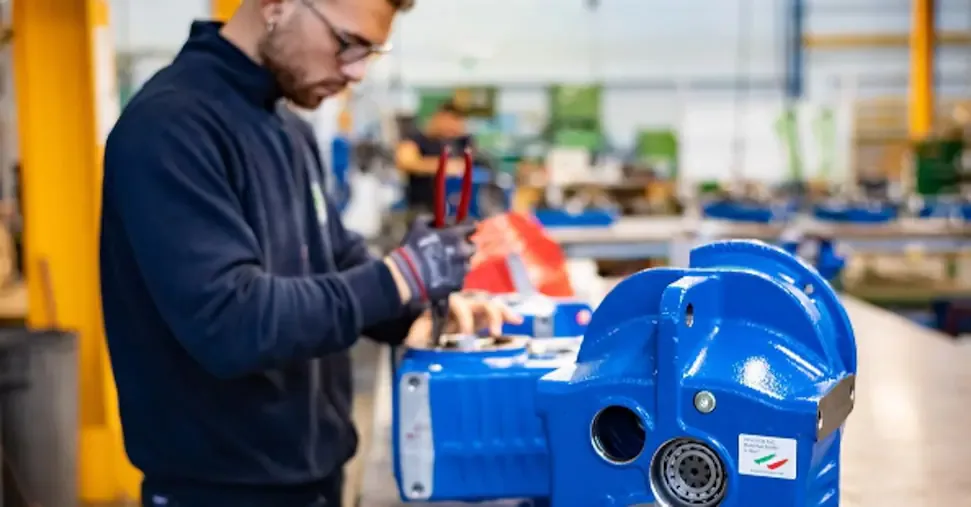











Taking any of the seven highway exits in the province of Avellino, you pass through woods, hills, and towns with a “chimney for every bell tower,” according to the post-earthquake mantra. And here, in the watchword of the Eighties, still lies the form and substance of Irpinia’s growing industry. In the fruits of a dynamism triggered by the arrival at the time of multinationals; supported by multiple incentives and driven – most recently – also by the Special Economic Zone. “Which have given a boost to an already industrial territory,” analysts reflect, in addition to the generational change.
Read more Morocco blocks hundreds of people heading to Ceuta
Behind the growth
But what unites success stories of companies from very different sectors and sizes – from agri-food to eyewear, from IT to pharmaceuticals – is above all a strong rooting in the territory, with its raw materials and potential. This allows, among other things, quite a few companies to become energy self-sufficient. Solid roots, for bold projections towards the world. So much so that the province ranks among those with the fastest-growing companies, according to a Luiss report
The Luiss report
The Italy Industrial Policy Report by Luiss talks about companies with “latent potential”: those that grow despite difficulties. On the map of territories with high growth firms – while Milan, the Northeast, and the main districts remain at the top – the provinces of Teramo and Avellino rank among the first places. “They surprised us,” admits Donato Di Carlo, assistant professor of economic policy at the London School of Economics and director of the Luiss Hub for New Industrial Policy. “We looked at companies with high revenue growth over the last 3-5 years and also went micro. Changing perspective,” alongside the more well-known one, another Italy emerges that is dynamic in a different way. Confirming – he explains – the need for a transformative industrial policy tailored to the different needs of different companies: with a heterogeneous territory, blanket incentives benefit only the North and increase inequalities.”
Read more On civil justice, the weight of asylum applications
High employment, many women-led companies
Almost all speak of investments in people; direct links with universities, internal academies, and professional training, starting with Its; and also widespread welfare, in an area with an employment rate above 70% among 35 to 49-year-olds, according to Unioncamere. There is also a significant presence of women-led companies (29% out of 36,000 registered as of March 31). Strong, like the vineyards that made the wine of these hills famous, are the abilities to turn challenges into strengths.
From the earthquake to connections, strength from difficulties
“I am convinced that it was the lack of infrastructure and connections that favored the digital vocation,” reflects – for example – Antonio Cianciulli of Acca software, a top player in Open BIM, building information modeling, technology for public construction contracts with the creation of digital twins. “Our potential will increase even more with the upcoming Hirpinia stop of the High-Speed/High-Capacity Naples-Bari line and the creation of a logistics platform for freight movement in Valle Ufita,” estimate entrepreneurs, unionists, and administrators.
Read more Migrants, deportations increase: +34% in the first six months