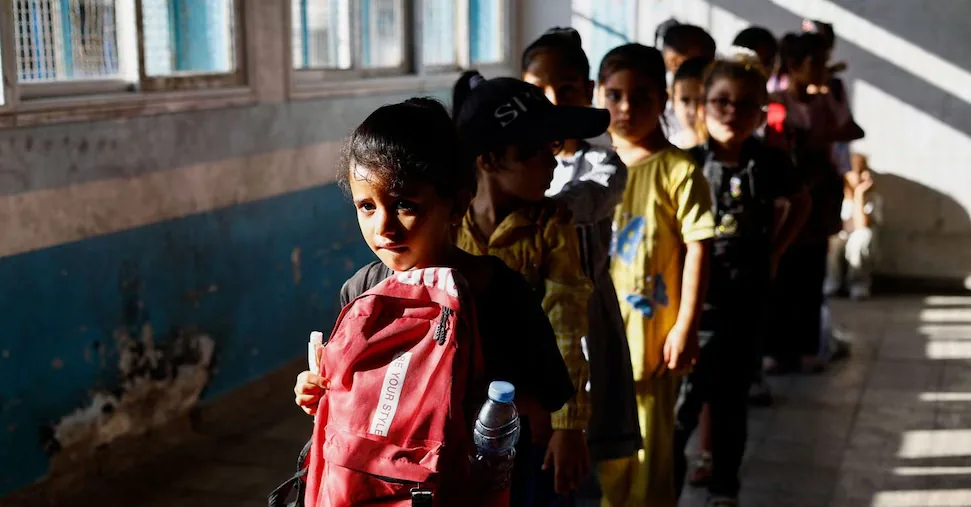











For years suspension has been one of the most traditional tools available to European schools to deal with serious behaviors. Today, however, in many countries a different belief is emerging: temporarily removing a student from the classroom may be necessary, but it is hardly sufficient to solve the problem.
Read more Sardinia, the ancient tradition of raw earth bricks to beat the extreme heat
Ask the Sun
The questions are automatically suggested by 24Ore AI
based on the displayed content.
The debate has come back into focus after Austria’s decision to introduce, starting from the 2026-2027 school year, mandatory reintegration programs for suspended students. The reform arises in a context of growing concern about the deterioration of the school climate and the increase in disciplinary measures. But the comparison with the rest of Europe shows that Vienna is not an isolated case. From France to Spain, passing through Italy, the idea is progressively taking hold that school discipline should have an educational purpose and not just a punitive one.
Austria: suspension becomes a mandatory pathway
The Austrian reform represents one of the most significant changes recently introduced in Europe in the field of school discipline. In the current system, a student can be suspended for up to four weeks in the presence of behaviors considered particularly serious or when staying at school represents an immediate risk to the safety of the school community. In cases where an expulsion procedure has been initiated, the suspension can be extended by an additional two weeks.
Read more Cybersecurity, alerts for attacks on businesses double, focus on LinkedIn and interviews of …
So far, however, the suspension period essentially translated into removal from the school environment without particular obligations. It is precisely this aspect that has been at the center of criticism from educators and experts, who argue that students who exhibit problematic behaviors are often those who would most need to maintain contact with the school.
The response of the government led by Education Minister Christoph Wiederkehr has been to transform suspension into a phase of structured intervention. From next school year, suspended students will have to participate in reintegration programs that include educational activities, psychosocial support, and school work up to twenty hours per week.
Read more Ponte Morandi, 1.13 billion of compensatory works still to be completed