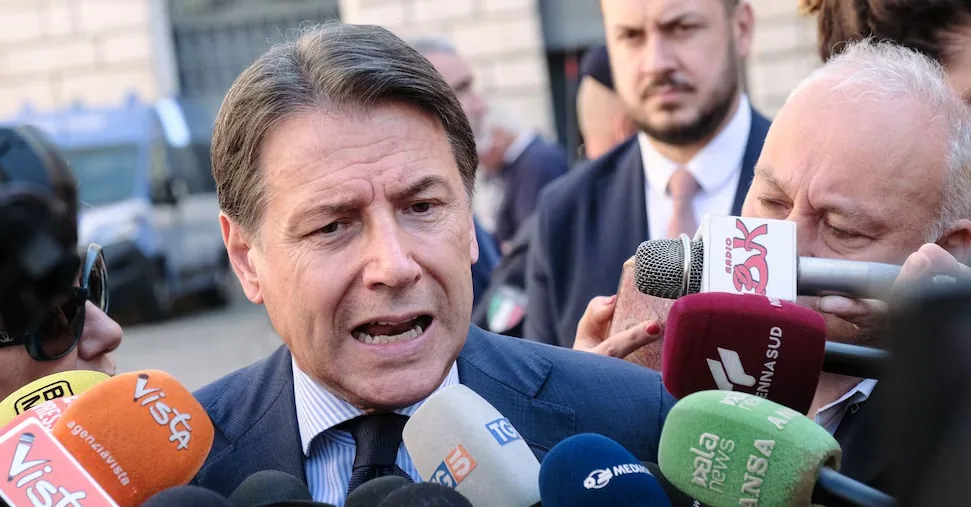











As if it had no other priorities, Italian politics has been revolving around Covid-19 for almost a week. The hearing of former Prime Minister Giuseppe Conte before the parliamentary inquiry commission on the management of the health emergency – canceled on Monday, rescheduled for Wednesday, and then held on Thursday – continues to divide the majority and the opposition. But the pandemic continues to have repercussions also from a health perspective. For example, on the volume of waste accumulated in past years and still awaiting disposal.
Read more Migrants, 3 landings in Lampedusa with 108 people
Ask the Sun
The questions are automatically suggested by 24Ore AI
based on the displayed content.
The confirmation comes from the Public Administration and Civil Protection decree, which on Tuesday obtained the approval of the Council of Ministers and which, after the summer break, will begin its conversion process into law in the Senate. Inside it is a provision, article 4, entitled “Urgent provisions regarding the Regional Health Service and public health” and which contains the appointment of an Extraordinary Commissioner destined to manage the environmental aftermath left by the pandemic period. He must have proven experience in directing and managing complex organizational structures and will be responsible, by March 31, 2027, for managing the activities of storage, custody, handling, transport organization, disposal, and elimination of materials previously acquired by the Ministry of Health.
Read more Van overturned in Foggiano: one farmworker dead and nine injured
Over 22 thousand tons of waste to be disposed of
What strikes most is the volume of waste involved. The technical report attached to the decree talks about 312,504 cubic meters of materials currently stored. Which correspond – the text reads – to “about 22,692 tons, at 16 warehouses located across the national territory.” Almost all of which, equal to 98.69% (masks, suits, gowns, and gloves), fortunately belong to the category of “non-hazardous waste.”
The funding
The cost of the measure is not insignificant, as it is estimated at 44 million euros for the current year and 40 million for the next. Resources are sourced through multiple channels. The first 44 come from three sources: 25 million from a reduction of the fund established by the 2008 Finance Act for transactions with subjects damaged by infected transfusions, 10 million from an old spending authorization contained in the 2006 Finance Act, and the remaining nine from the Indispensable Needs Fund created by the 2015 Stability Law. For the second 40 million, a single source is tapped, the compensation for damages caused by anti-Covid vaccinations.
Read more Bianchedi in the National Team, the case explodes. Exchange of blows between Coni and Figc