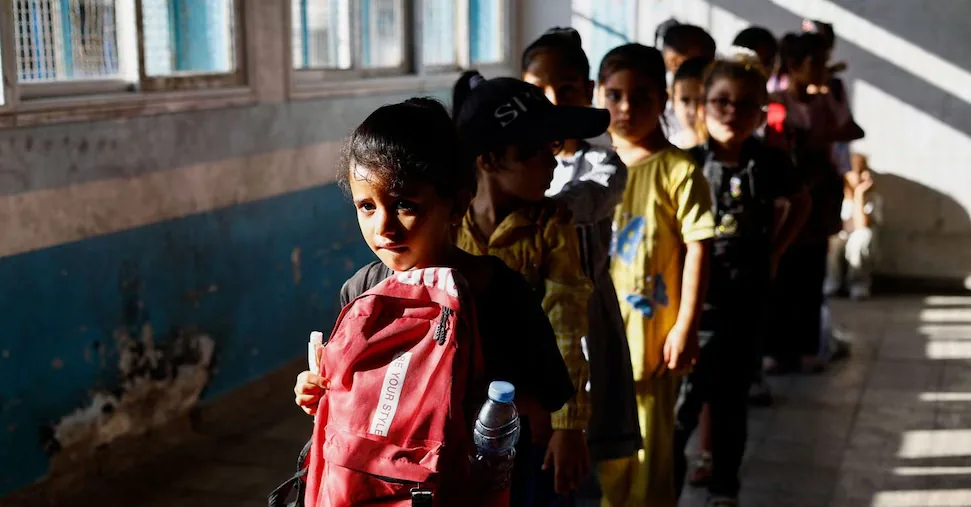











In the end, Africa has overtaken. But there is nothing to celebrate for the continent. The new Sofi report on the state of global food security, published today by Fao, shows that although world hunger has decreased for the third consecutive year in 2025, improvements remain fragile, unevenly distributed, and insufficient to achieve the Sustainable Development Goals by 2030. A goal that risks fading on the horizon burdened by climate change, cuts in public resources and humanitarian funding, but above all by the explosive shockwave of the conflict in the Middle East.
Read more Clashes in Bologna, Meloni: unacceptable violence against Law Enforcement
Ask the Sun
The questions are automatically suggested by 24Ore AI
based on the content viewed.
It is estimated that in 2025, 7.8% of the world population suffered from hunger, down from 8.1% in 2024 and 8.6% in 2022. Considering the point estimate of 645 million in 2025, this indicates a decrease of about 14 million people compared to 2024 and 43 million compared to 2022.
Africa’s Lead
In terms of regional disparities, the report tells us that Asia, along with Latin America and the Caribbean, has made steady progress in recent years. In contrast, Africa today has the highest number of people suffering from hunger in absolute terms (in a context of rapid population growth): 309 million individuals, compared to 292 million in Asia and 32 million in Latin America and the Caribbean (respectively 20%, 6%, and 4.8% of the population). However, the previous upward trend recorded in Africa is beginning to stabilize (with the share of the population suffering from hunger falling from 20.3 percent in 2024 to 20.0 percent in 2025).
Read more Mps, to bankers richer supplementary health and pension benefits and an 8 euro meal voucher
Outlook in Light of the War in the Middle East
The annual report also offers updated projections on hunger for the next five years, in light of the conflict in the Middle East. Depending on the duration of the crisis’s impact on food inflation – worsened by rising energy and fertilizer prices – about 510-520 million people could still suffer from hunger in 2030 (compared to the lower projection of 503 million in the pre-conflict scenario), with a projected 20 percent reduction in the global number of undernourished people. However, other potential disruption factors, including the effects of extreme weather events such as El Niño in 2026 and 2027, are not considered in these projections and could further worsen the effects.
From the report’s authors (Fao, Unicef, Ifad, Pam, WHO) the final warning: conflict in the Middle East, extreme weather events, cuts in public resources and humanitarian funding risk making the gap unbridgeable.
Read more The Msf report: the health emergency in Gaza is Israel’s fault