
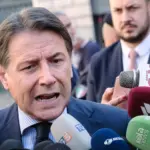



Looking at the battlefield, Western capitals are increasingly convinced that Ukraine is turning the tide of the war. Admiral Giuseppe Cavo Dragone, current chairman of NATO’s military committee, agrees, according to what he states in an interview granted to the Kyiv Independent.
Read more Artificial intelligence and advertising images: more risks for businesses
Ask the Sun
The questions are automatically suggested by 24Ore AI
based on the content viewed.
“I share this assessment because I have information provided by NATO headquarters, so this is what we see,” he says, emphasizing that Kyiv is “gaining, not losing” ground and that there may be “frustration” from Moscow behind its “strong reaction.” However, it is difficult to define what could represent a victory for Ukraine, he continues: “I really can’t imagine something like the simple reconquest of territory by Ukraine or Russia’s surrender. It is something we must think about very, very carefully.”
NATO’s primary goal is to achieve a ceasefire in order to sit at the table and begin discussing a lasting peace for Ukraine, says the former Italian Chief of Staff. In parallel, the Alliance is receiving a “large amount of information” related to conducting modern warfare through the Joint Analysis, Training and Education Center (Jatec) in Poland, which it also uses to “structure the training” of NATO operators. “This is something very, very valuable to us,” explains Cavo Dragone, emphasizing that the use of drones and mass production are “a problem” for the allies, “along with electronic warfare and speed: speed in adapting, speed in using all innovation and having that innovation available on the field.”
Read more Wildberries, unlikely that sellers whose products have been damaged will receive a …
Elements that NATO is learning from the Ukrainians, he adds. Asked whether these lessons could prove useful in a potential future conflict between NATO and Russia, the admiral again highlights the importance of studying modern warfare but adds that the Alliance’s deterrence “must be projected into the future to try to understand what the evolution of the threat will be. NATO has two main threats, which are Russia in the conventional realm and terrorist groups in the unconventional realm,” he explains, and it is therefore necessary to try to understand how these threats may evolve and adapt accordingly. In this, “the starting point from the Ukrainian theater is invaluable.”
According to Cavo Dragone, the scenario envisaged by several Western intelligence agencies, in which Russia could prepare some kind of hostile operation on the territory of the Baltic nations or Poland, is “realistic insofar as we define Russia as a threat. It is a threat because Russia could make this kind of move. But it is also something we must be prepared for, and we must be ready to inflict much more damage on them than the advantage they could gain from this kind of decision. And we are doing that,” he says, emphasizing that if Moscow attacked it would end up losing “much, much more” than it could gain, “and we are ready.”
Read more Export, here are the provinces with the highest sales: Milan and Florence lead the way