






Unical soars in the global university rankings thanks to disciplines and performances in which it achieves excellence: Computer Engineering, for example, pushes the University of Calabria to first place among Italian universities in the 2026 Shanghai Global Ranking of Academic Subjects, entering the 101-150 range in Computer Science & Engineering. Last year it was about 100 positions lower.
Read more Le OrchiDee, women who cure illness by helping others
Ask the Sun
The questions are automatically suggested by 24Ore AI
based on the content viewed.
The faculty’s leadership
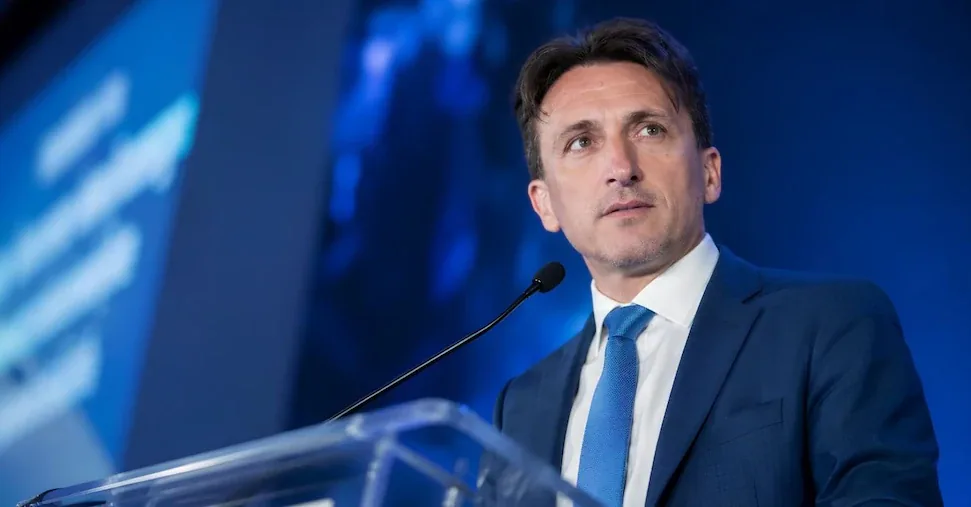
“We are talking about a strategic sector for scientific research and technological development – comments the rector of the University of Calabria Gianluigi Greco, who is driving acceleration precisely in research and innovation –. The most significant data in this ranking concerns the faculty, given the strong growth of the World-Class Faculty indicator, referring to the presence of highly cited researchers, with scientific recognitions, editorial roles, and responsibilities in international organizations. These results have matured within a community capable of training young scholars, participating in international scientific networks, and ensuring continuity in research. This ecosystem, together with openness to external collaborations and different application fields, is what has made Unical competitive in a sector where quality must necessarily be measured on a global scale.”
AI made in Calabria
But the top ranking in Shanghai is not an isolated exploit. The Calabrian university has been investing in Computer Science for 50 years: the university’s computing center was established in 1975 and four years later the consortium for research and computer applications was formed. The Calabrian university was therefore a pioneer in the sector, graduating Italy’s first computer engineer in 1991. “In the last twenty years, Unical’s attractiveness has been mainly based on the scientific reputation built in artificial intelligence – emphasizes Greco, who is among the top experts in the field. – Several scholars from the university have obtained the title of “Fellow” from the main international associations in the sector, recognitions for publications presented at world conferences, roles and responsibilities in scientific organizations. And there is another decisive element, the university’s choice not to close itself off, not to recruit only internally, not to settle for a provincial perspective. Unical has opened up to external calls, sought talents even outside Italy. The arrival of Professor Georg Gottlob, one of the most authoritative computer scientists in the world, after a long career in Vienna and Oxford, is a strong signal for the entire international scientific community.”
Read more Arabia, Italian Aspides fighter hit: Crosetto writes to the EU
Europe’s anthropocentric vision on artificial intelligence
At the heart of the departments of Computer Engineering and Mathematics, academic realities with different but strongly complementary scientific identities, “artificial intelligence follows an approach that integrates logical and symbolic reasoning with machine learning techniques – explains Gianluigi Greco –, from neuro-symbolic AI to large language models, up to agent systems. Completing the picture are data science, cybersecurity, and optimization, along with research on cloud and edge computing, Internet of Things, cyber-physical systems, telecommunications, and automation, which bring artificial intelligence into devices, infrastructures, and production processes.” The goal is to build systems capable of tackling complex problems in an explainable and verifiable way, “because today artificial intelligence is required not only to be powerful but also reliable and transparent. In this sector, the pace must be rapid but aware – warns the rector, also as coordinator of the committee established at the Presidency of the Council of Ministers for updating the national strategy on Artificial Intelligence. – We must participate as protagonists in the research and development of these technologies, otherwise we will be forced to depend on systems designed elsewhere. At the same time, it is necessary to train people able to understand, verify, and govern algorithms. Europe has chosen an anthropocentric vision and I believe this must remain our direction: not to slow down innovation, but to make it reliable and put it at the service of people, their rights, and the quality of their lives.”
Skills for the territory
Thus, in the wake of a new digital humanism, the territory remains in the foreground. “We are a young university, in a region considered peripheral, competing with the best universities. Here, in the territory, we primarily leave skills. We see them in the professionals it has trained, in the companies born from research, in the businesses that have chosen this area because here they find prepared young people. It is not a side effect: it is the very reason why this university was born. When, in the early seventies, it was decided to build a campus in Arcavacata, the idea was clear, to create a place capable of changing Calabria through the power of culture and innovation. That original vocation is still today the compass of every choice we make.”
Read more Golden Power, the forum on rules for foreign investments in Madonna di Campiglio