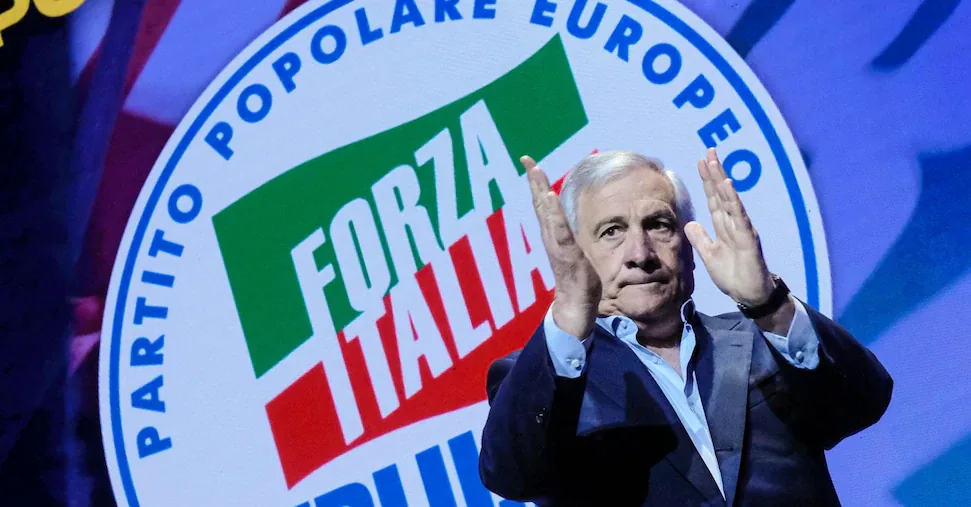











Lega returns to pressing on early exits, Forza Italia imagines a total tax exemption on the thirteenth month salary, Fratelli d’Italia opens up to the hypothesis, on the government’s table – with elections in sight – of starting with a one-off intervention and then evaluating whether to make it structural at a later time. All agree on expanding the scope of the Irpef cut to that middle class somewhat neglected in the first four years of the legislature. The maneuver’s worksite restarts from taxes and pensions, as almost every year, with parties also taking advantage of the Cl Meeting stage to assert their demands.
Read more Another year of growth for Italian cosmetics
Ask the Sun
The questions are automatically suggested by 24Ore AI
based on the displayed content.
Exit flexibility
It is precisely from Rimini that the party of via Bellerio relaunches the dossier on exit flexibility, shelved in the last year. “Unacceptable to have to work until 67 years old” while talking about “the implementation of artificial intelligence in companies,” the premise of the Undersecretary of Labor, Claudio Durigon, who is also one of Matteo Salvini’s deputies. Moreover, from January there would also be an increase of one month in the retirement age. So “as Lega we are studying the possibility of including in the maneuver an exit flexibility that allows, in full freedom of choice of workers, to retire at 64 years old.” An ambitious project – whose details will perhaps be revealed already at the two-day “pre-Pontida” at the Officine Farneto in Rome, on September 8 and 9 – which must reckon not only with the resources available but also with the overall sustainability of the pension system.
A new possibility to leave the workforce early would have its impact but the president of Inps, Gabriele Fava, limits himself, when asked about it at the Rimini Fair, to say that the institute will apply “as always, according to the rules of the art” any indications “from the Legislator.” Instead, the president of Inps relaunches his proposal for a “pension piggy bank” for newborns, a “third pillar” that helps young people not to end up, at the end of the road, with meager pensions. The idea finds favor with the Minister of Labor, Elvira Calderone, but to move from words to deeds it will be necessary to “work step by step,” sitting at a table, technicians and government, to assess the feasibility of the measure.
Read more Mitsubishi, humanoid robots in the factory against the labor shortage crisis
Thirteenth month salary
Meanwhile, the idea of giving workers more robust thirteenth month salaries, perhaps already for this Christmas, is gaining more and more consensus. The minimum hypothesis, explained the economic manager of FdI, Marco Osnato, could cost half a billion (a 15% tax cut for those with incomes up to 15,000 euros), but they are trying to expand the scope and strengthen the discount. Perhaps starting it “experimentally to evaluate the results” before possibly making the measure permanent, explains those working on the dossier. It is unlikely that the FI proposal of a “tax exemption up to 100%” can be reached. The party led by Antonio Tajani, moreover, in its wishes has already indicated the abolition of the car tax and also an “immediate cashback on healthcare expenses.”
Irpef cut
It is easier to reach the Irpef cut for incomes up to 60,000 euros. Today the reduction of the rate to 33% applies up to those who reach the threshold of 50,000 euros. Expanding the scope, Osnato always calculated, would cost about 3 billion. Then there would be a need to strengthen the endowment for healthcare. This is requested by Minister Orazio Schillaci and also by governors, starting with that of Lazio, Francesco Rocca, of Meloni faith. Because it is good to invest in “technologies and Community Houses.” But then “doctors, nurses and healthcare staff” are needed to make them work.
Read more Immigrants and returns, entries are stable: but from Morocco +71.6%