








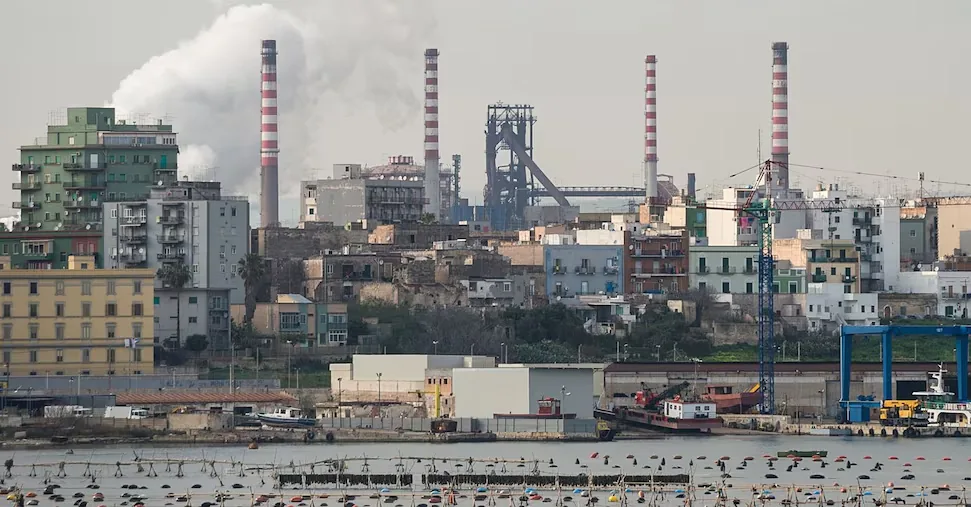
The ex Ilva case erupts on the eve of the tomorrow morning’s summit at Palazzo Chigi between the Government and the unions. Today the Milan Court of Appeal decided to stop the steel plant in Taranto. The Court, civil section, reads in the provision, “accepts the request for an injunction and, as a result, partially overturns the challenged decree, ordering Ilva spa, Acciaierie D’Italia spa and Acciaierie d’Italia holding spa, all under extraordinary administration, to suspend production activities in the hot area of the Ilva plant in Taranto, granting them a period of ninety days, starting from the last communication of the provision, to complete the suspension operations under the supervision of the control authority.”
Read more Indonesia in chaos: the head of the Central Bank resigns
Ask the Sun
The questions are automatically suggested by 24Ore AI
based on the displayed content.
The appeals and the response of the Court of Appeal
The Court of Appeal ruled on the appeals submitted in recent months by a group of citizens from Taranto and the association “Genitori Tarantini”, as well as by the interested companies, regarding the Milan Tribunal’s ruling which in February ordered the halt of steel production by August 24 unless the company revised and adjusted a series of environmental prescriptions of the Aia issued last year and considered by the judges insufficient regarding environmental protection and public health.
For the Court, “it is evident that the citizens’ request, as formulated in the memorandum of September 30, 2025, and reiterated in the appeal, was motivated – before and after the 2025 Aia – by the risk of harm to the right to health and the right to climate. The citizens’ requests cannot be considered generic because the reasons on which the plant’s management generates the risk of health damage have been precisely stated, with specific reference, among other things, to various identified harmful substances,” as well as “the inadequacy, from time to time, of the measures used by Ilva to prevent the risk of pollution-related diseases” and “the unjustified delays in implementing suitable interventions to prevent risks, as allowed by provisions of the 2025 Aia which are allegedly illegitimate.”
Read more The new tax system on the Third sector: regulations and clarifications
“The 90-day term is appropriate”
“Therefore, AdI and Adih, as well as Ilva spa, must be ordered to suspend activities in the hot area – writes the panel -. For this purpose, the Court considers it appropriate to grant them ninety days to complete, safely, the suspension operations of the installations, under the supervision of the control authority. The term will start from the last communication of the decree to the recipients of the provision.”
“It is left to the autonomy of the managers and owners of the plants to initiate the resumption of activities – states the Court – when they have completely removed the asbestos still present in the plants; adopted the necessary measures to bring fine dust emissions within safety limits, referring to the authorized production scenario of 6 million tons per year, and in any case within the administrative procedural framework provided by Legislative Decree no. 152/2006 and Directive 2010/75, within the terms specified by the CJEU ruling.” This is the ruling of the European Court of Justice which in June 2024 established that an industrial installation causing damage to the environment and health must be stopped.
Read more Air transport, Italian historical record: 8,446 flights in one day