









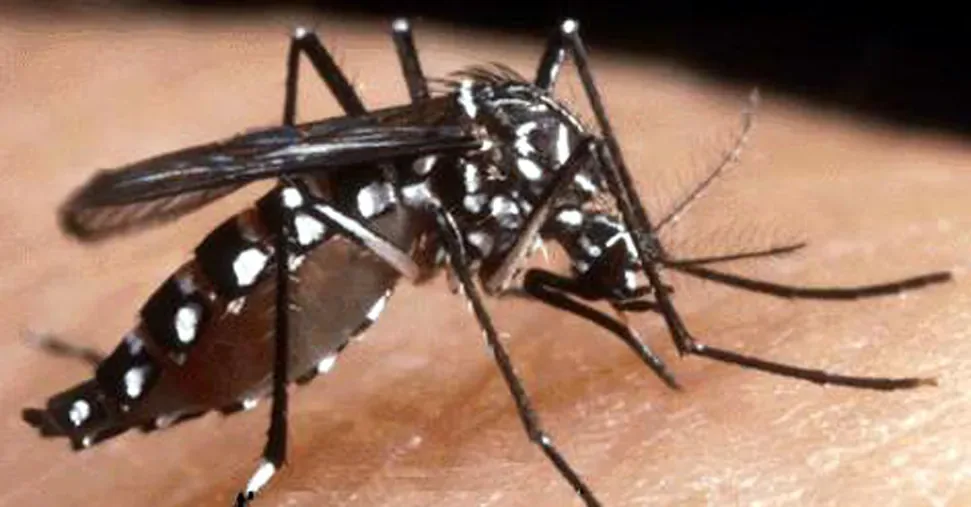
Good news from Italian research against the insect protagonist of the summer: mosquitoes. For the first time in Europe, an innovative platform for the sustainable control of the tiger mosquito has been tested on a large scale. A strategy that somewhat resembles the Trojan horse trick and has also proven capable of naturally reducing the fertility of females, without harm to the environment. The experimental campaign, conducted at the Centro Ricerche Enea Casaccia (Rome) within a collaboration between Enea, Google LLC, and Sapienza, involved 1.6 million fake males, identical in appearance to those of the target species, but made incompatible with females in the laboratory thanks to a bacterium. In practice, by introducing these special males into the insect population, the ability to produce fertile eggs destined to survive the winter is reduced by 88%.
Read more For German Chancellor Merz, people work little in Germany. And in Italy?
Ask the Sun
The questions are automatically suggested by 24Ore AI
based on the displayed content.
The strategy
The tiger mosquito (Aedes albopictus), besides being a nuisance during summer nights and days, can transmit various arboviruses, such as dengue, chikungunya, and Zika, which are now also affecting Europe. The technique is based on releasing large numbers of modified males that, thanks to symbiosis with a harmless bacterium – Wolbachia – are reproductively incompatible with wild females. Result? All the eggs produced by wild females are sterile, which impacts the mosquito population. “This approach, applied exclusively to the tiger mosquito, offers a concrete alternative to the massive use of chemical insecticides,” explains Riccardo Moretti, researcher at the Agriculture 4.0 Laboratory of Enea.
The bacterium
The key to everything is the bacterium: it is present in most insect species with which it lives in symbiosis. Wolbachia makes females in which it is present reproductively compatible. Females without Wolbachia are sterilized by males hosting this bacterium. Enea has reproduced this natural mechanism by replacing the Wolbachia present in the tiger mosquito with another strain of the bacterium hosted by the common mosquito. By acting on the population dynamics of these insects over time, “the foundations are laid for a more lasting, effective, and sustainable control of populations, keeping them constantly below epidemiological risk thresholds,” clarifies the scientist.
Read more Journalist killed: here is who Luca Esposito was, his birthday was just a few days ago
The experiment
The Enea research team was the first in the world to obtain a line of tiger mosquitoes with the described characteristics. Google developed this control strategy in parallel with Enea to combat other mosquito species and is already involved in various large-scale implementation programs in different areas of the world. In this project, Google was responsible for multiplying the tiger mosquito population producing incompatible males developed by Enea, selecting only the males, and handling their packaging and air transport from Miami (United States) to the release area in Casaccia.
Pilot model
On its part, Sapienza of Rome, due to its experience in studying mosquitoes that transmit pathogens, contributes to the program through validation methods of the technique and by monitoring untreated control areas. In the 53 hectares within the campus of the Centro Ricerche Enea Casaccia – between late July and late October 2025 – about 1.6 million incompatible male tiger mosquitoes were released in total. The study continues this year as well. As Maurizio Calvitti, researcher of the Sustainable Agri-food Systems Division of Enea, explains, the Casaccia Center “represents a pilot model of particular value for the transferability of the methodology to other operational contexts, both in Italy and internationally.” And it holds the promise of freeing us from these annoying and dangerous disease-carrying insects.
Read more Dear fuel, record diesel runs over 2.1 euros in Italy